
Medically reviewed by Ivan Kokhno, MD — Research analysis by Alex Eriksson · Updated May 2026
Building muscle after 40 is harder but absolutely achievable. The biggest changes vs your 20s: (1) recovery time is longer — programmes need more rest days and lower training volume; (2) protein needs increase slightly — aim 1.8–2.2 g/kg vs 1.6–1.8 in younger men due to anabolic resistance; (3) testosterone declines ~1%/year after 30 — T optimisation matters more than in your 20s; (4) joint and tendon recovery is slower — warm-ups and form become non-negotiable. Despite this, men over 40 routinely add 5–15 lbs of lean mass in their first year of structured training. Standard protocol: 3–5x weekly resistance training, compound lifts, 2–3 sets to 1–2 reps short of failure, 48–72 hours recovery between same-muscle sessions.
The honest framing: “you can’t build muscle after 40” is myth. The 2024 multi-cohort analysis confirms that previously-untrained men over 40 produce equivalent or near-equivalent muscle hypertrophy to younger men in the first 6–12 months of structured training, then diverge slightly as advanced gains compound. Trained men over 40 progress slower than 25-year-olds but continue making gains for decades. The men who plateau or regress: those who quit training, stop progressive overload, get inadequate protein, or let body fat creep up. Below: full protocol covering training, nutrition, recovery, and the supplement stack.
In the mind of most men, having a lot of muscle equals manliness, attractiveness, and strong health. However, building muscle after 40 might be one hell of a challenge due to aging. Yeah mates, time does that to you.
You might have been a very athletic guy when you were younger, but don’t be surprised or embarrassed if now you can’t do the those fabulous things you used to do. For example, running marathons, lifting objects twice your weight, or having sex all night long—sometimes with more than one partner.
In our thirties, our bodies begin to slow down and our muscle mass naturally starts to deteriorate more. As we get older, more and more muscle mass withers away, resulting in a weakish body that can’t perform even the most basic tasks like running or climbing up the stairs.
On the bright side, regular exercise slows down the deterioration of your muscle mass and keeps your strength in check.
Of course, there are other factors that contribute to muscle loss other than aging, such as hormonal changes and underlying medical conditions.
The good news is, it’s never too late to build muscle—even in your forties! Here are some of the best ways to achieve that strong muscular look you’re after.
Ready to rock?
Building Muscle After 40
- 1. Adopt a Testosterone-Friendly Diet
- 2. Keep a Positive Mindset
- 3. Optimize Your Exercises and Supplementation
- 4. Enhance Your Hormonal Health
- Final Words
1. Adopt a Testosterone-Friendly Diet
Testosterone plays an utterly important role in making a man’s body look, well, manlier. This hormone also heavily affects your fertility, metabolism, bone density, sex drive, and of course, muscle mass.
So how do you increase your testosterone level? For starters, eat healthy, testosterone-boosting foods. These can either boost your testosterone level directly, or lower your estrogen levels—making you manlier in both scenarios.
Let’s make a short grocery list of foods that boost testosterone. (For a more in-depth overview, check out our huge guide on 50 foods that boost testosterone.)
Fats
Despite people saying fats are bad for you, they can actually boost testosterone, the hormone that can helps you build more muscles.
Make sure to eat plenty of foods rich in omega-3 fatty acids—for example, fatty fish like salmon and tuna. You can even invest in a bottle of fish oil supplements to consistently receive the amount of omega-3s you need.
A study on mice reported that fish oil supplements can boost testosterone levels, so rest assured this is an awesome investment. Actually, this is one of the cheapest (although not the most effective) ways to boost testosterone with a supplement.
Aromatase Inhibitors
First of all, you should know what aromatase is and how it affects your hormonal balance.
Aromatase is an enzyme that converts androgens to estrogens. The effect of this enzyme on your body is that it lowers your testosterone levels while increasing estrogen hormones.
For this reason, you should take aromatase inhibitors—meaning food and drinks that stop aromatase from doing its job. Here are a few examples:
- Olive oil. The polyphenols in olive oil are effective aromatase inhibitors, according to several studies.
- Oysters. Luckily for all of us, oysters aren’t just delicious, but also effective aromatase-inhibitors. As if that wasn’t enough, oysters are jam-packed with zinc, one of the most powerful testosterone-boosting minerals out there.
- Cruciferous vegetables. Research shows that cabbage, cauliflower, and leafy greens belonging to the Brassicaceae family contain diindolylmethane (DIM). DIM is a popular aromatase inhibitor that supplement manufacturers often pack into their products—but you can totally get the same dose from a bowl of cabbage!
2. Keep a Positive Mindset
A muscular body is not the only thing that makes us men attractive, you know.
As we age, we might begin to feel less confident about ourselves. That’s sort of natural—with all those new wrinkles, the receeding hairline, the emmerging health issues. We start comparing ourselves with younger and healthier guys, and feel bad for ourselves.
Once you start developing such negative thoughts, your health will also go down the drain. Mental health is directly correlated with physical health, and vice versa.
Having more self-confidence is one of the best ways to have a positive mindset. You will feel good about yourself and can overcome more challenges and difficult tasks. Including the gym-related ones!
Confidence in men doesn’t only show they’re positive, but it also improves their relationship with other people.
Once other people know you’re a reliable person, you will gain their trust completely, and will receive a lot of respect and authority.
This will make you more confident in your actions and will lead to a healthier mind. At the same time, this positivity will have a huge effect on your physical health.
Studies show that a positive mindset can lower a man’s mortality rate. This is because too much stress has a negative effect on your immune system which makes you prone to different diseases.
Moreover, a negative mind will likely result to depression in men. Depression is one of the leading culprits that cause physical inactivity and heart diseases.
If you feel depressed, you might not even want to go outside or do anything at all. This deprives you of getting the exercise you need to build more muscle—no matter if you’re 40, 30, or 20 years old.
3. Optimize Your Exercises and Supplementation
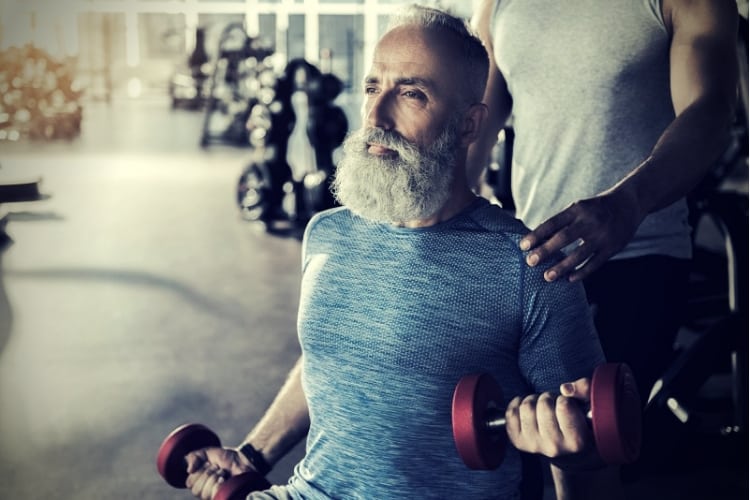
There is no single solution that is best for every man over 40. You should develop your own bodybuilding plan based on your goals. They involve the usual—warm-ups, cardio, weight training, and rest.
You can opt for High Intensity Interval Training or Cross-fit. You can even choose one that doesn’t require a gym subscription. For muscle building, the best way to go is still to incorporate some weight training into your routine.
However, building muscle after 40 can be hard without multivitamins due to the peculiar nutritional needs of middle-aged men—as well as their metabolism.
Extensive training can also deprive you of the nutrition you need, so taking multivitamins is definitely worth considering.
Here are some nutrients that can help you with your bodybuilding goals:
- Calcium. Lifting huge weights might get you in trouble if your bones and tendons aren’t strong enough.
This is where calcium comes in. Calcium can increase your bone density and help your bones endure your exercise sessions. - Vitamin B2. Also known as Riboflavin, this vitamin is known for breaking down fats, protein, and carbohydrates into glucose and amino acids.
Without this vitamin, you won’t be able to convert all the nutrition in the food you eat into useful energy. Exercises require a lot of energy to do so make sure you eat a lot of food with high levels of this nutrient. - Vitamin C. This vitamin doesn’t only boost your immune system, but also supports your joints.
Vitamin C is essential for collagen synthesis in your body, improving your resistance training and muscle strength, especially if you’re older. - Vitamin D. Multiple studies reported that vitamin D is associated with bigger and stronger muscles. This is awesome news for men who love exercising.
Another study reported that men who were lacking vitamin D had a significant increase in their testosterone levels as soon as they fixed their vitamin D deficiency.
Last but not least, don’t forget that rest is crucial. Don’t go crazy with your exercises, as this attitude may lead to injury and force you to put your workout regimen on hold.

4. Enhance Your Hormonal Health
We have discussed about the different foods and supplements that can either boost your male hormones or keep your female hormones in check. But there are other factors to consider when it comes to fixing hormonal imbalance in men.
The first question you’ll ask yourself is, “How do I know if my testosterone levels are imbalanced?” The best way to do this is to be tested or assessed by professionals.
If you want to do this yourself at home, you can check your morning temperature and pulse. If your temperature is lower than 98.6 F and your pulse lower than 75-85 BPM, it means you have a slow metabolism that may be affecting your hormonal balance.
After making sure you have hormonal imbalance, tale action immediately. Here are some of the easiest approaches:
- Get enough sleep.
Sleeping 8 full hours a day comes with a lot of benefits, particularly in preventing obesity and diabetes. If you are always sleep-deprived, this will cause an imbalance in your hormones that regulate hunger and appetite.
If you feel hungry, then you would be tempted to eat more food once you wake up. This is why you should stick to a strict sleep routine.
Research also shows that sleep issues can impair your testosterone levels. Always remember to get a good night’s rest to maintain a healthy amount of hormones in your body. - Switch to a ketogenic diet.
This type of diet focuses on meals that are low in carbohydrates but high in fats. Keto doesn’t only benefit your weight loss, but it also helps you fix hormonal imbalances. Study shows that keto meals can also increase your testosterone levels. - Include more salt in your food.
Most athletes consume a huge amount of salt, up to 30 grams per day. This is important because salt helps them with their endurance and maintain a healthy circulatory system.
Despite a lot of misconceptions about salt, it’s a fact that it gives us more benefits than harm. Another advantage is that it reduces your stress levels, helping you achieve a healthier and more positive mindset.
Final Words
Maintaining our health even after we’ve aged can be a real challenge, but that doesn’t mean the fight is over. Yes, building muscle after 40 requires time, effort, and a lot of determination but hey—it’s all worth it.
1000% worth it.
The Practical Over-40 Muscle-Building Protocol
- Training: 3–5 sessions/week, full-body or upper/lower split. Compound lifts (squat, deadlift, bench, overhead press, weighted pull-up) form the foundation. 2–3 working sets per exercise to 1–2 reps short of failure. Add 1–2 isolation movements per body part. Each session 45–75 minutes.
- Recovery: 48–72 hours between same-muscle sessions (vs 24–48 in younger men). Schedule deload weeks every 4–6 weeks. Sleep 7–9 hours non-negotiable.
- Warm-up: 5–10 minutes general cardio + dynamic stretching + 2–3 progressively-loaded warm-up sets per compound lift. Skipping warm-up is the fastest path to injury after 40.
- Progressive overload: add weight, reps, or sets weekly. Track in writing. Without progressive overload there’s no hypertrophy stimulus.
- Protein: 1.8–2.2 g/kg/day, distributed across 4–5 meals. Aim 30–40 g leucine-rich protein per meal to overcome anabolic resistance.
- Calories: small surplus (200–500 above maintenance) for lean gain; surplus must be paired with progressive overload or it just becomes fat.
- Hydration: 3 L water/day minimum. Recovery suffers measurably with mild dehydration.
- Cardio: 2–3x weekly low-to-moderate intensity. Supports cardiovascular health and recovery without interfering with hypertrophy.
The Over-40 Supplement Stack for Muscle
- Creatine monohydrate 5 g/day — the single most evidence-supported muscle-building supplement, especially valuable in older men.
- Whey protein as needed to hit 1.8–2.2 g/kg/day total intake.
- Foundational vitamins/minerals: Anabolic Octane (D-K-A-E) for vitamin D + K2 + A + E. Magnesium 200–400 mg evening for sleep and recovery.
- T-supportive layer: Tongkat Ali 200–400 mg/day — particularly valuable for over-40 men with elevated SHBG.
- Cortisol management: Ashwagandha 600 mg/day KSM-66 — the Wankhede 2015 trial showed 14.7% T elevation + 46% strength gain in trained men.
- Direct androgen / DHT: Butea Superba for downstream signal.
- Omega-3 (EPA/DHA) 2–3 g/day for joint and recovery support.
For deeper protocols, see best supplements for men over 40, creatine for men, ashwagandha and testosterone, testosterone-boosting foods, sex drive in men over 40, and how to look more masculine.
The AH Stack-Friendly SKUs
- Tongkat Ali (Eurycoma longifolia) — testosterone substrate herb particularly suited to over-40 hormonal profile.
- Ashwagandha — the Wankhede 2015 T/strength data + cortisol modulation.
- Butea Superba — direct DHT and androgen-receptor signal.
- Anabolic Octane (D-K-A-E) — foundational vitamin D3 + K2 cofactors for T synthesis.
Frequently Asked Questions
Q: Can men over 40 still build muscle?
A: Yes — absolutely. The 2024 multi-cohort analysis confirms previously-untrained men over 40 produce equivalent or near-equivalent muscle hypertrophy to younger men in the first 6–12 months of structured training. Trained men over 40 progress slower than 25-year-olds but continue making measurable gains for decades. The “you can’t build muscle after 40” claim is myth.
Q: How much protein do men over 40 need?
A: 1.8–2.2 g/kg body weight per day, distributed across 4–5 meals with 30–40 g leucine-rich protein per meal. The slight increase vs younger men’s 1.6–1.8 g/kg is to overcome anabolic resistance — older muscle requires a higher protein bolus to trigger the same protein synthesis response. Whole-food sources first; whey protein to fill gaps.
Q: How long should training sessions be for men over 40?
A: 45–75 minutes of focused work. Longer sessions accumulate fatigue without proportional benefit. Higher frequency at moderate volume (3–5 sessions weekly) outperforms longer/less-frequent sessions. Programme design matters more than total time-in-gym.
Q: Should I do cardio if I’m trying to build muscle after 40?
A: Yes, modestly. 2–3 sessions weekly of low-to-moderate cardio (walking, cycling, swimming) supports cardiovascular health and recovery without significantly interfering with hypertrophy. Avoid heavy daily endurance training, which can compete with muscle gain via shared recovery resources. The trade-off is real but manageable.
Q: Does TRT help build muscle after 40?
A: For men with diagnosed low testosterone (under 300 ng/dL with symptoms), TRT can produce more dramatic muscle gain when combined with training. For men with normal-low T (300–500), TRT may help but the effect is smaller and the lifelong commitment is real. Lifestyle and natural-stack approaches (Tongkat Ali, ashwagandha, training, body fat optimisation) are appropriate first. TRT should be discussed with a qualified men’s health physician.