
Medically reviewed by Ivan Kokhno, MD — Research analysis by Alex Eriksson · Updated May 2026
Ashwagandha (Withania somnifera) is the best-studied adaptogen for testosterone elevation in resistance-trained men. The 2015 Wankhede et al. RCT showed 600 mg of standardised KSM-66 ashwagandha extract daily for 8 weeks raised serum testosterone by 14.7%, increased bench press strength by 46%, and produced measurable arm-circumference growth versus placebo in 57 men. Standard dose is 300–600 mg KSM-66 or Sensoril extract daily, ideally with food.
The honest framing: ashwagandha works largely through cortisol reduction — chronic high cortisol opposes testosterone signalling and accelerates muscle catabolism. Lower the cortisol baseline and free testosterone has more room to act. Effects appear at 4 weeks and consolidate by 8–12 weeks. Best results in stressed men with elevated cortisol baseline; less impressive in already-low-cortisol men.
Ashwagandha & testosterone share a relationship that can help you maintain your testosterone levels during prolonged stress. However, there are many Ashwagandha benefits for men but first we want to talk a bit about men’s health, particularly the hormone testosterone.
Low testosterone is a problem that affects many men. Resulting in loss of sex drive, weight gain, muscle loss, low energy, and difficulty reproducing. Low testosterone has many causes, stress, eating the wrong sorts of foods, exposure to toxins, and testicular injury can all result in lowered testosterone.
If your testosterone levels are low enough, you may find a doctor willing to prescribe you with testosterone replacement – usually in the form of injections, gels, or patches. However, to qualify for testosterone replacement therapy, your T-levels have to be very low and the therapy itself can often be prohibitively expensive.
Ashwagandha & Testosterone
- Boosting Testosterone Naturally
- What Is Ashwagandha?
- Ashwagandha & Testosterone
- How to Use Ashwagandha
- Recommended Ashwagandha Products
- Conclusion
Boosting Testosterone Naturally
In an effort to boost their testosterone levels naturally, some men turn to herbal supplements – many of which are commonly used in Ayurvedic medicine. Also known as Ayurveda, this is one of the world’s oldest holistic (whole-body) healing systems and was developed thousands of years ago in India.
The herb most often used to treat low testosterone and it’s many symptoms is ashwagandha – also known as Withania Somnifera, meaning winter cherry, and sometimes spelt ashwaganda, ashwanghanda, ashwaghanda or ashwagand.
If you want to shrug off the problems commonly associated with low testosterone, build muscle, lose fat, reclaim your enjoyment of sex, or simply feel more manly and energetic, the Ayurvedic herbal supplement ashwagandha could be just what you are looking for.
What Is Ashwagandha?
Predominately grown in India, ashwagandha is often called Indian Ginseng. Is ginseng good for sex? Ashwagandha means ‘Smell of Horse’ which refers to its bouquet in the wild and the belief that consuming this ashwagandha energy herb will give you the sex drive, stamina, and strength of a horse!
Ashwagandha & Testosterone
Ashwagandha is a noted and well-researched testosterone booster. It does this both directly and indirectly by countering many of the causes of low testosterone. There are many ashwagandha studies that reveal the following benefits from regular use:
- Increased Testosterone – Several studies have shown that regular use of ashwagandha over the course of three-months resulted in significant increases in serum testosterone and sperm quality/mobility and is considered a viable treatment for infertility. In addition, ashwagandha has also been shown to increase the production of follicle stimulating hormone (FSH), boost luteinizing hormone (LH) production, and elevate serum DHEA levels, creating a “perfect storm” for increasing testosterone.
- Improved Sleep – Too little sleep can inhibit testosterone production. Most men fail to get enough sleep and many men suffer from disrupted sleep. Six to nine hours’ sleep will provide your body and nervous system with the rest it needs to maximize testosterone production. Ashwagandha has been shown to be an effective, non-addictive sleep aid.
- Reduced Stress – Too much stress results in an increase in production of the hormone cortisol. Elevated cortisol levels drive down testosterone. Stress is often all-but unavoidable but research shows that regular use of ashwagandha supplements can help men to manage the symptoms of stress more effectively and prevent the testosterone-crushing effect of cortisol. In this role, ashwagandha is known medically as an adaptogen.
- Improved Sexual Function – Ashwagandha is one of the most commonly used Ayurvedic herbs for sex and fertility. Improved fertility is commonly associated with increased testosterone levels but ashwagandha also seems to increase erectile function and boost sperm count too. These two factors combine to produce an increase in fertility and reproductive health.
- Improved Immunity – Consuming ashwagandha can help increase the ability of your immune system to fight off illness and infection. Stress, low testosterone, and an unhealthy diet can all result in frequent but minor illnesses. Ashwagandha has been shown to increase the efficiency of the immune system which should lead to fewer illness.
How to Use Ashwagandha
Ashwagandha herbal supplements are taken orally and in capsule or powder form. Both capsules and powder are equally effective. Most people find taking capsules more convenient however the raw powder is better value for money.
Dosages vary depending on the product being used but ½ teaspoon for ashwagandha powder or two 1000 mg capsules is most typical. Many people prefer to take it before bed since ashwagandha can cause sedation and be beneficial for sleep.
Recommended Ashwagandha Products
Rather than pointing you to third-party brands, we now make the exact ashwagandha product we always wished existed — a clean, high-potency extract formulated specifically for men.
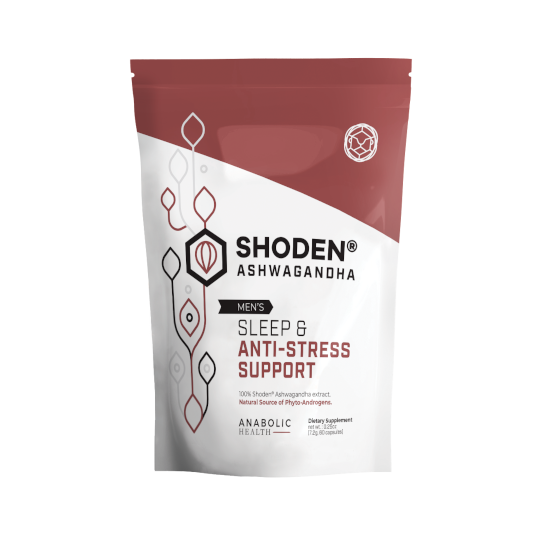
A potent ashwagandha extract formulated for men — stress relief, healthy testosterone and recovery support, without fillers.
★★★★★ $24.95 $19.95
The Mechanism: Cortisol, Stress, and Testosterone
Ashwagandha is classified as an adaptogen — a botanical compound that modulates the stress response across multiple physiological systems. The dominant mechanism for its testosterone-elevating effect isn’t direct hormonal stimulation; it’s cortisol reduction. The 2019 Lopresti meta-analysis showed ashwagandha reduces serum cortisol by 20–30% in stressed populations across 12 trials. Lower cortisol means:
- Less testosterone-suppressive HPA axis activation
- Less catabolic signalling on muscle tissue (cortisol breaks down muscle, testosterone builds it)
- Better insulin sensitivity (high cortisol drives insulin resistance)
- Improved sleep quality (high cortisol disrupts sleep architecture, low sleep further suppresses testosterone)
The 14.7% testosterone elevation in the Wankhede study isn’t ashwagandha “boosting” testosterone directly — it’s removing the cortisol brake that was suppressing the body’s normal testosterone output. This is why ashwagandha works best in men with chronically elevated stress baseline (high cortisol, poor sleep, demanding jobs, intense training without adequate recovery), and produces smaller benefits in men whose baseline cortisol is already well-managed.
KSM-66 vs Sensoril vs Generic Ashwagandha Root Powder
Three categories of ashwagandha supplement matter:
- KSM-66 — standardised root extract patented by Ixoreal Biomed. The form used in most published clinical trials including Wankhede 2015. 5% withanolide content. Manufactured to specific extraction standards.
- Sensoril — standardised root + leaf extract from Natreon. Higher 10% withanolide content. Some prefer for stress and sleep applications; less data on testosterone-specific effects.
- Generic ashwagandha root powder — varies wildly in active compound content. Often 1–3% withanolides. Cheap but unreliable. If you can’t access KSM-66 or Sensoril, look for products that disclose specific withanolide content (target 5%+).
Standard daily dose: 600 mg of KSM-66 (300 mg twice daily) or 250–500 mg of Sensoril once daily. Take with food to improve absorption. Cycle off every 8–12 weeks for 2–4 weeks if using long-term, though there’s no strong evidence cycling is necessary.
Stacking Ashwagandha With Other Hormonal Levers
Ashwagandha pairs well with complementary mechanisms in a broader testosterone-optimisation stack:
- Tongkat Ali (200 mg/day) — supports the LH-testes axis from a different angle than cortisol reduction. The combination is one of the most popular natural-T stacks.
- Resistance training 3-5x/week — non-negotiable. Ashwagandha amplifies training-induced strength and muscle gains by reducing cortisol’s catabolic interference; without training, the testosterone benefit doesn’t translate to physique.
- Adequate sleep (7–9 hours) — the same mechanism: ashwagandha lowers cortisol; sleep recovery further lowers cortisol; testosterone synthesis happens during deep sleep specifically.
- Body fat 8–15% — aromatase activity in adipose tissue converts testosterone to estradiol; high body fat actively opposes the effect of any T-supportive intervention.
The AH Stack-Friendly SKUs
Our own catalogue covers ashwagandha plus the complementary layers:
- Anabolic Health Ashwagandha extract — standardised single-ingredient extract.
- Tongkat Ali (Eurycoma longifolia) — testosterone substrate herb that pairs with ashwagandha’s cortisol-reduction approach.
- Butea Superba — direct DHT support for the downstream androgen-receptor signal.
- Anabolic Octane (D-K-A-E) — vitamin D and zinc cofactor support for testosterone synthesis.
For more on natural testosterone optimisation: testosterone-boosting foods · testosterone-boosting herbs · natural steroid alternatives · creatine for men.
Frequently Asked Questions
Q: How long does ashwagandha take to raise testosterone?
A: Subjective effects (better sleep, lower stress, improved gym recovery) appear within 2–4 weeks. Measurable serum testosterone elevation appears at 4–8 weeks of consistent dosing at 600 mg KSM-66 daily. The Wankhede study saw the 14.7% elevation at the 8-week endpoint; longer protocols may produce larger effects.
Q: Should I take ashwagandha in the morning or at night?
A: Most users report best results splitting the dose: 300 mg with breakfast and 300 mg with dinner. The evening dose specifically helps sleep quality, which compounds the cortisol-reduction effect. If only taking once daily, evening with food is generally preferred. Avoid taking on an empty stomach — absorption is significantly improved with fat or food in the gut.
Q: Are there ashwagandha side effects?
A: Generally well-tolerated. Some users report mild GI upset (resolves with food), drowsiness in the first 1–2 weeks (benefit if taken at night, problem if taken in morning), and occasional thyroid effects (ashwagandha can mildly elevate TSH; relevant for hypothyroid patients). Avoid if pregnant/breastfeeding, taking immunosuppressants, or have hyperthyroidism.
Q: Can women take ashwagandha?
A: Yes, with different dosing considerations. Women generally use 300 mg of KSM-66 daily for stress and sleep applications. The testosterone-elevation effect that men seek isn’t relevant for women, and at high doses (above 1 g/day), ashwagandha can cause mild androgenic side effects in some women. The stress-reduction and sleep benefits are equivalent across sexes.
Q: How does ashwagandha compare to Tongkat Ali for testosterone?
A: Different mechanisms, comparable magnitudes. Ashwagandha works through cortisol reduction; Tongkat Ali works through SHBG modulation and direct LH-testes axis support. The two stack well. For stressed men with poor sleep, ashwagandha tends to produce more dramatic results. For men with good baseline stress management who want pure testosterone elevation, Tongkat Ali tends to win. Combining both at standard doses typically outperforms either alone.
Conclusion
Many men suffer with low testosterone but never take steps to remedy this problem. As such, they go through life feeling less joy for life than they should. Low sex drive, difficulty losing weight, muscle loss – these problems are not normal!
You do not have to suffer the effects of low testosterone – you can regain your sex drive and your energy, and feel many years younger too.
In many cases, there is no need to resort to testosterone replacement therapy; you can boost your testosterone levels using ashwagandha supplements. Supported by a large body of academic research, ashwagandha can help restore your testosterone levels safely and naturally while also improving many other aspects of your health.
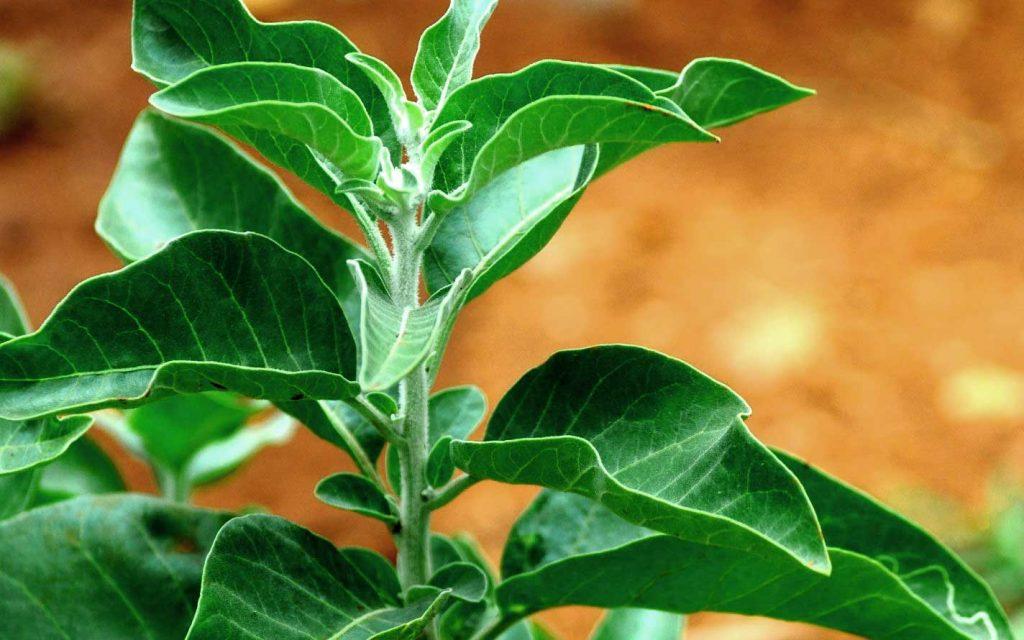
Featured Image Credit: “Ashwagandha” (CC BY-SA 2.0) by Hari Prasad Nadig
Product image credits: Amazon.com