Medically reviewed by Ivan Kokhno, MD — Research analysis by Alex Eriksson · Updated May 2026
Bulgarian Tribulus terrestris is the gold-standard source for Tribulus supplements. Bulgarian-grown Tribulus aerial parts (leaves and fruit) reliably produce the highest steroidal saponin content (often 90%+ when properly extracted), versus Indian/Chinese Tribulus which typically standardises at 20–40%. The most documented active compound is protodioscin, which has weak androgenic and pro-dopaminergic effects in animal models. Standard daily dose: 250–1,500 mg of Bulgarian-source standardised extract, split AM/PM with food.
The honest framing: “Bulgarian Tribulus” is a quality marker, not a magic bullet. The plant geography matters because Bulgarian aerial parts genuinely have higher saponin content; the result is a more reliable supplement, not a fundamentally different mechanism. The 2014 Pokrywka review found Tribulus does not consistently raise testosterone in men with normal baseline levels — this applies to Bulgarian Tribulus too. Where Bulgarian Tribulus has data: libido (the 2017 GamalEl-Din meta-analysis showed positive effects in 6 of 8 trials). For substrate-driven testosterone, Tongkat Ali has substantially stronger evidence than even the highest-quality Tribulus. Below: what makes Bulgarian Tribulus different, dosing, and where it fits in a male health stack.
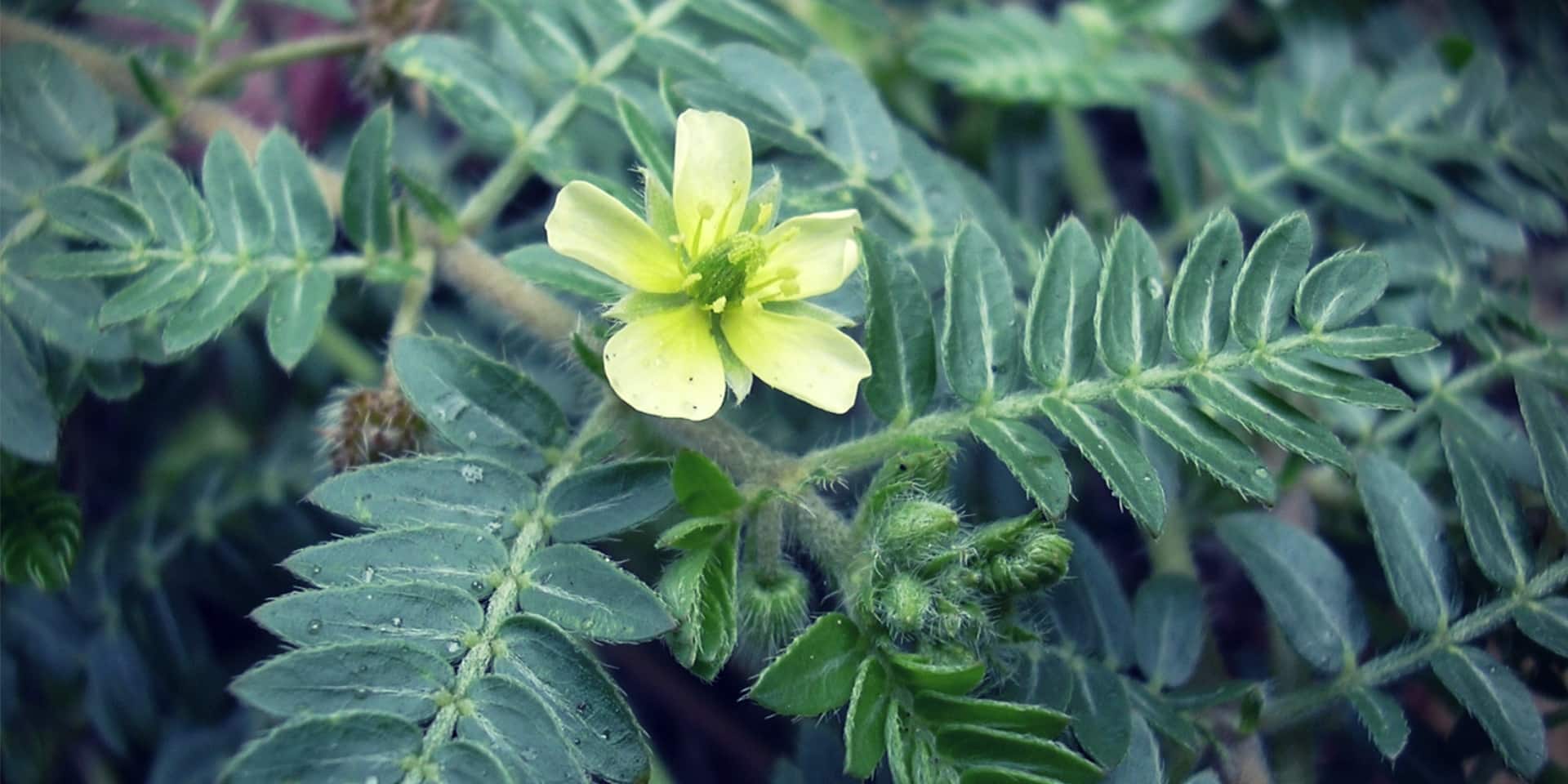
Bulgarian Tribulus, also known as Tribulus Terrestris, is an herb native to the warm temperate and tropical regions of southern Europe, southern Asia, Africa, and Australia. This herb can grow in poor soil and desert climates.
Due to its hardiness and the low cost of cultivation, companies selling it aggressively marketed it by stating almost every available health benefit in using the herb or its extract. This led to it being immensely popular during the late 90’s to early 00’s.
Unfortunately, the spiels in these advertising campaigns resulted to confusion and misinformation about the herb. This article will set things straight, tackling the most common of these claims so you can decide if the Bulgarian Tribulus is for you.
Bulgarian Tribulus
- Bulgarian Tribulus Increases Testosterone Levels
- Bulgarian Tribulus Can Boost Muscle Growth and Strength
- Bulgarian Tribulus Possesses Antioxidant Properties
- Tribulus Terestris Improves Libido
- Bulgarian Tribulus Helps Improve Erectile Dysfunction
Bulgarian Tribulus Increases Testosterone Levels
This claim arises from the herb’s significant amounts of protodioscin. This compound has been observed to increase testosterone levels in animal studies. However, this claim does not hold true for humans. Various studies have tested the herb and its active compound, and any markers associated with testosterone levels appear unaffected.
The traditional herbal medicine was tested on elite rugby players and it did not show affect their testosterone/epitestosterone (T/E) ratio. It showed no effect on a study observing its effects on androgen production of young men. Studies observing DHEA concentrations and luteinizing hormone (LH) levels also showed no improvements.
However, tribulus terrestris can help you maintain healthy levels of testosterone. Studies have shown that it inhibits the effects of the enzyme 5-alpha-reductase.
This inhibition is similar to the mechanism of medications for male-patterned baldness, prostate cancer, and benign prostatic hyperplasia does to the body. By preventing the full effects of the enzyme, the body has less testosterone converted to dihydrotestosterone.
With less testosterone converted to DHT, the body has increased levels of free and total testosterone. This indicates that the herb can help those with testosterone deficiency although it has no significant effect on healthy individuals.
Bulgarian Tribulus Can Boost Muscle Growth and Strength
Jeffrey Petermann is an American bodybuilder who won in the 1970 IFBB bodybuilding competition. He credited his success to Tribulus Terrestris, which was said to be comparable to the effects of anabolic steroids at the time. Unfortunately, this claim was found to be false by various studies done in the 90’s and 00’s.
In one study, professional athletes went through a double-blind study during their off-season. They did heavy resistance training for five weeks while being supplemented by either a placebo or 450 milligrams of the herb’s extract. The results between the placebo group and the supplemented groups showed no differences on muscular strength, muscle mass, and body composition.
However, one study done in 2015 shows a potential benefit from the herb for bodybuilding and fitness. Unlike other studies, the researchers measured for other markers in the body. They observed that supplementing with 1250 mg/kg of bodyweight alleviated muscle damage and improved anaerobic performance.
This indicates that Bulgarian Tribulus can indirectly influence muscle growth and strength gains. By preserving lean muscle mass and improving an aerobic performance, you have a greater potential gain in doing high-intenstiy workouts. The combination can potentially compound lean muscle mass gains you experience from the workout.
Bulgarian Tribulus Possesses Antioxidant Properties
The herb is used in the traditional medicine of various cultures. Chinese, Ayurvedic, and Arabic herbalists used it to treat urinary complaints and infections, digestive problems, painful joints, and sexual dysfunctions.
Modern science confirmed the efficacy of some of its applications as an antioxidant. Studies have shown that Bulgarian Tribulus prevent oxidative damage on the kidneys, liver, and testicles.
- Liver: Test subjects were administered with the liver-damaging toxin cadmium. Damage incurred from the toxin caused significant changes in liver function and severe markers for unhealthy liver health. Dosing the subjects with Tribulus Terrestris extract caused significant reversal of these negative liver health markers.
- Kidney: Male subjects who have acute kidney injury were given 11 milligram per kilogram of bodyweight of the herb’s extract. After 13 days of oral dosage, researchers observed significant improvement in kidney function, and decrease in kidney oxidative stress and cellular damage.
- Testicles: Male animal test subjects showed significant protection from toxins introduced into their testicles. Live sperm counts, sperm motility, hormone levels are at healthier levels due to the herb’s antioxidant protection. This was further researched on a test tube study of cryopreserved human sperm specimen wherein sperm motility and viability improved after T. Terrestris extract was applied. Furthermore, human test subjects with low sperm count have exhibited improved sperm count after 60 days of supplementation.
The antioxidant protection given to these organs can be attributed to the plant’s properties as an adaptogen. It contains chemical compounds that prevent the physical and chemical breakdown of cells due to stress (oxidation). Other examples of adaptogens include ginseng, ashwagandha, and holy basil.
Tribulus Terestris Improves Libido
This claim has basis since researchers were able to test it extensively. Studies were able to confirm the claim from animal test subjects up to human test subjects.
In tests done on animals, Tribulus Terrestris supplementation resulted in improved sexual activity in rats that have normal sexual function, sluggish sexual behavior, or castrated reproductive organs. As for human test subjects, individuals that supplemented with the herb exhibited improved sexual drive.
Currently, there is no definite explanation on the herb’s effect on the sexual drive. One explanation is the herb increases the sensitivity of androgen receptors in the brain that trigger sexual desire. Another explanation suggests that the herb’s antioxidant properties reversed oxidant stress and damage that contribute to dysfunction in sexual response.
Bulgarian Tribulus Helps Improve Erectile Dysfunction
Current research suggests that this claim is completely false. This was confirmed on a test of 100 patients that went through 30 days of supplementation. They were given two doses per day of the extract or the placebo. The study observed that those supplementing with Bulgarian Tribulus does not have a significant improvement in erectile function compared to those who have only taken a placebo.
However, it should be noted that those with partial androgen deficiency experienced significant improvement from the erectile dysfunction arising from their condition.
As a testosterone booster, it should not even be considered as one as studies have confirmed its lack of boosting effect. However, you can still benefit from it since it has been proven in some areas. So, if you are looking for a way to boost your sex drive, preserve lean muscle mass, or boost antioxidant protection, Bulgarian Tribulus is worth trying out.
Where Bulgarian Tribulus Fits in a Male Health Stack
Bulgarian Tribulus is a quality-grade Tribulus extract; it doesn’t change the underlying evidence on Tribulus efficacy. The cleanest practical layering:
- Foundation (strongest evidence): Tongkat Ali 200–400 mg/day for testosterone substrate — substantially stronger human RCT evidence than Tribulus.
- Direct androgen / DHT: Butea Superba for downstream signal.
- Acute vasodilation / PDE5: Black Ginger (Kaempferia parviflora) 100–200 mg/day — documented natural PDE5 inhibitor.
- Cortisol modulation: Ashwagandha 600 mg/day KSM-66 — the Wankhede 2015 trial.
- Bulgarian Tribulus as rotation/adjunct: 250–1,500 mg/day standardised aerial-part extract (90% saponins). Cycle 8–12 weeks on, 2–4 weeks off. Particularly reasonable for libido/dopamine-driven aspects rather than primary T elevation.
- Foundational vitamins: Anabolic Octane (D-K-A-E) for vitamin D + K2 + A + E.
For deeper protocols, see best Tribulus supplements (buying guide), Tribulus extract: standardisation guide, Tribestan (Bulgarian-source product), herbal aphrodisiacs, ashwagandha and testosterone, and best supplements for men over 40.
The AH Stack-Friendly SKUs
- Tongkat Ali (Eurycoma longifolia) — testosterone substrate herb with much stronger RCT evidence than Tribulus.
- Butea Superba — direct DHT and erection-quality support.
- Black Ginger (Kaempferia parviflora) — documented natural PDE5 inhibitor.
- Ashwagandha — cortisol modulation; the Wankhede 2015 T/strength data.
Frequently Asked Questions
Q: Why is Bulgarian Tribulus considered better?
A: Bulgarian-grown Tribulus aerial parts have higher steroidal saponin content than Tribulus from other regions (often 90% standardisation possible vs 20–40% for Indian or Chinese sources). The geographic difference is real and reflected in chemical assays. The result is a more reliable supplement; not a fundamentally different compound.
Q: Does Bulgarian Tribulus actually raise testosterone?
A: Weakly and inconsistently. The 2014 Pokrywka review found Tribulus does not consistently raise T in men with normal baseline. This applies to Bulgarian Tribulus too — the geography improves quality but doesn’t change the underlying T-response evidence. Where Bulgarian Tribulus has data: libido and dopaminergic effects, with 6 of 8 trials in the 2017 GamalEl-Din meta-analysis showing positive libido outcomes.
Q: How much Bulgarian Tribulus per day?
A: 250–1,500 mg/day of standardised extract, split AM/PM with food. Higher saponin standardisation (90%) lets you use the lower end of the range. Effects, if present, appear at 4–8 weeks. Cycle 8–12 weeks on, 2–4 weeks off.
Q: Is Bulgarian Tribulus safer than other Tribulus sources?
A: Marginally. The geographic specification doesn’t change inherent safety; both are well-tolerated at standard doses. The bigger safety question for any Tribulus is adulteration with anabolic steroid analogues. Buy from reputable manufacturers with third-party testing certificates regardless of geographic source.
Q: Bulgarian Tribulus vs Tongkat Ali?
A: Tongkat Ali wins on evidence quality. Multiple human RCTs show measurable T elevation with Tongkat Ali; Bulgarian Tribulus evidence is weaker. For libido specifically, both have data; many men stack both. For primary T support, Tongkat Ali should be the foundation; Tribulus an adjunct.