

Medically reviewed by Ivan Kokhno, MD — Research analysis by Alex Eriksson · Updated May 2026
Gynostemma pentaphyllum (jiaogulan, sometimes called “Southern ginseng” or “the herb of immortality”) is a Chinese adaptogenic herb traditionally used for longevity and vitality. Active compounds: gypenosides (saponins similar to ginsenosides). Documented effects: (1) AMPK activation — the same metabolic pathway activated by exercise and metformin, with implications for blood glucose regulation and metabolic health; (2) cholesterol/lipid modulation in human trials; (3) adaptogenic stress-resistance in the broader Chinese medicine framework; (4) anxiolytic effects in some animal data. Standard dose: 200–500 mg/day standardised extract or 3–6 g/day dried herb (tea), taken with food.
The honest framing: Gynostemma has accumulating evidence for metabolic and cardiovascular health (the AMPK-activation story is intriguing) but limited specific male-health/T data. As a “natural metformin” alternative, it’s interesting but not strongly studied. As an adaptogen, ashwagandha and rhodiola have substantially more direct human evidence. Gynostemma fits as an optional addition for men prioritising metabolic health and stress resistance, not as a primary T or libido tool. Below: full mechanism, dosing, and where Gynostemma fits in a male health stack.
Southern Ginseng, or Gynostemma pentaphyllum, is a climbing vine extensively found in New Guinea, and East and South Asia. The Southern Chinese and Northern Vietnamese used it as a medicinal herb in their traditional cultures.
The elderly inhabitants of these areas supposedly attribute their long lives to using the herb. According to word-of-mouth, people who used this grow into old age with fewer instances of disease or illness. Because of this, Gynostemma gained the name “Immortality Herb” among the people who use it.
Gynostemma
- What Gynostemma Can Do For You
- 1. It can help improve and maintain your cardiovascular health
- 2. It controls your allergic reactions
- 3. It Protects Your Brain from Damage
- 4. It can help manage stress-related disorders
- 5. It Increases Nitric Oxide Levels
- 6. It Improves Conditions of Diabetes
- 7. It Can Help You Lose Body Fat
- 8. It Protects Your Cells from Oxidative Damage
- Warnings on Gynostemma Use
- Conclusion
What Gynostemma Can Do For You
1. It can help improve and maintain your cardiovascular health
Although it is a part of different genus of plants, Gynostemma also contains the beneficial compound ginsenoside found in Panax ginseng. From various studies, it has shown to reduce the risk of stroke due to blood clots, heart failure, arteriosclerosis, and abnormal heart rhythm.
Aside from ginsenosides, Gynostemma pentaphyllum also contains its own unique compound known as gypenosides. This compound can improve blood flow in narrowed arteries and protect the heart from damage during a heart attack. Gypenosides can also compound the effects of cardiovascular exercise because of its ability to improve your recovery from it.
2. It controls your allergic reactions
Your immune system is made-up of a pro-inflammatory system (Th2) and an anti-inflammatory system (Th1). An allergic reaction happens when your body has an over-activated Th2 system response to a chemical compound. Gynostemma controls this overreaction by increasing the production of Th1 (T helper 1) cells in your body. This results to reduced histamine production, airway inflammation, and inflammatory astrocyte activation.
Furthermore, gynostemma increases your blood flow and metabolism by increasing nitric oxide and AMPK production. This helps your body immediately eliminate from your system the compound that caused the allergic reaction.
3. It Protects Your Brain from Damage
Our brains require an uninterrupted supply of oxygen to metabolize glucose for energy. When this supply is interrupted, the brain can experience damage. This can lead to temporary memory loss, impaired physical movement, and poor attention span and decision-making. In severe cases, this can lead to seizures, coma, or brain death.
Gynostemma can protect your brain from this based on the observations on an in vitro study of hippocampal slices. The study noted that the brain cells were still functional even when after deprivation of oxygen and glucose.
Moreover, Gynostemma extract supplementation helped revive cellular function even when it did not have said protection prior to deprivation. This led it to being studied as a possible treatment for those who have undergone stroke.
Aside from this, the extract can also protect the brain from oxidative damage that leads to Parkinson’s disease and Alzheimer’s disease. The research is still at the stage of animal and in vitro testing but results are promising. The test subjects administered with gypenosides prevented the manifestation of signs that indicate onset of said diseases. Furthermore, it showed that higher doses showed improved results, which indicates its potential for human use.
4. It can help manage stress-related disorders
Stress is a normal part of your daily life. But, when this stress becomes a persistent part of your day, it can lead to a variety of ailments. The most common of these are mood disorders and digestive disorders.
Gynostemma has been found to help moderating stress because it can control the stress hormone levels of the body. And, even when stress has started to manifest in various disorders, the herb can still help as it can help control these symptoms. Research has shown that Southern Ginseng was successful in alleviating stress-related migraines, gastritis, ulcers, oxidative damage, depression, and anxiety.
5. It Increases Nitric Oxide Levels
Gynostemma pentaphyllum supplementation can increase your body’s nitric oxide production. Increased nitric oxide levels help your body to have better blood flow for erectile function, exercise performance, and muscular strength and endurance. The increased blood flow also helps you recover faster from muscle soreness and Improve nourishment of muscles and other tissues targeted after your workout.
6. It Improves Conditions of Diabetes
Because gynostemma increases nitric oxide levels, it can also help those with type-2 diabetes. This is due to type-2 diabetics having poor nitric oxide production, which causes them to have high blood pressure, and have high risk for heart and kidney disease. Supplementing with the herb to increase nitric oxide levels can go a long way for type-2 diabetics since it increases their insulin sensitivity, and improves their blood sugar control.
7. It Can Help You Lose Body Fat
In preliminary tests, test subjects that took gynostemma pentahyllum supplements lost fat without any intervention from their food intake. This is said to be due to the activation of AMPK (or AMP-activated protein kinase). The activation of this protein prompts the body to increase metabolism. Since increased metabolism requires more energy, the protein would also trigger the release of fatty acids from your stored body fat so that your body can burn it for energy.
8. It Protects Your Cells from Oxidative Damage
Gynostemma contains a variety of phytochemicals that bind to free radical molecules. Binding these molecules prevent them from running free to wreak cellular damage on the different cells and tissues of your body. Tests on animals have shown that supplementation with gynostemma reduced oxidative cell damage.
However, not all parts of the Southern Ginseng plant possess antioxidant properties. Only the seed of the plant has shown this property due to its high content of polyunsaturated fatty acids and linoleic acid. Other compounds present in the oil that help in fighting free radicals include phytosterols, squalene, and tocopherol.
Warnings on Gynostemma Use
Like any supplement, you should check for any interactions it might have with your medications or existing health conditions. You should never take Gynostemma tea, extracts, or supplements with immunosuppressing drugs because of its effect on your immune system. It should also be noted that it could increase the effect of supplements or medication that slow blood clotting.
Conclusion
Gynostemma pentaphyllum can provide a variety of benefits for your health. With properties that promote stress relief, free radical protection, and physical performance, it has definitely gained its reputation in traditional medicine.
If you are looking to try this out for yourself, it is best to get a Southern Ginseng teas or supplements sourced from farms that grow their product free from chemical pesticides.
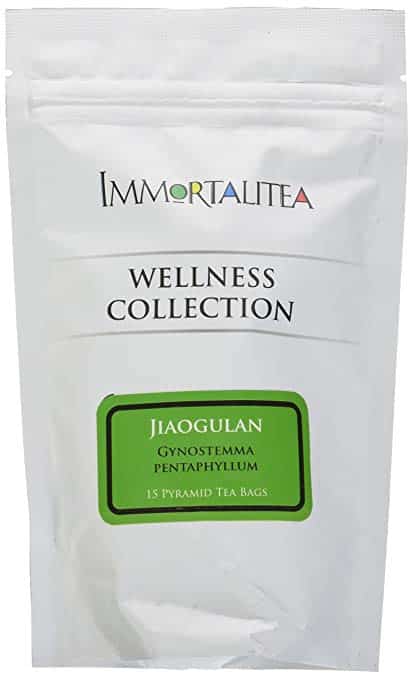
Gynostemma Tea
Where Gynostemma Fits in a Male Health Stack
Gynostemma’s strongest applications are metabolic/cardiovascular support and as an adjunct adaptogen. The cleanest practical layering:
- For metabolic / cardiovascular health: 200–500 mg/day standardised extract or jiaogulan tea 1–3 cups/day. Effects on blood glucose, lipids, and AMPK activation accumulate over 8–12 weeks.
- Substrate / hormonal foundation (better T evidence): Tongkat Ali 200–400 mg/day for testosterone substrate.
- Direct DHT: Butea Superba for downstream signal.
- Cortisol management (better-studied adaptogen): Ashwagandha 600 mg/day KSM-66; pair with or substitute for Gynostemma depending on preference.
- Foundational vitamins: Anabolic Octane (D-K-A-E) for vitamin D + K2 + A + E.
For deeper protocols, see ashwagandha and testosterone, herbal aphrodisiacs, Cordyceps militaris (medicinal mushroom), Rhaponticum carthamoides (Maral root), best supplements for men over 40, and testosterone-boosting foods.
The AH Stack-Friendly SKUs
- Tongkat Ali (Eurycoma longifolia) — testosterone substrate herb.
- Ashwagandha — the better-studied adaptogen with the Wankhede 2015 T+strength data.
- Butea Superba — direct DHT and erection-quality support.
- Anabolic Octane (D-K-A-E) — foundational T-supportive cofactors.
Frequently Asked Questions
Q: Does Gynostemma raise testosterone?
A: Direct human evidence for measurable T elevation is limited. Animal data is suggestive but inconsistent. Gynostemma’s stronger evidence is for metabolic and cardiovascular endpoints (blood glucose, lipids), not testosterone specifically. Treat T effects as a possible bonus, not the primary reason to take it.
Q: How much Gynostemma per day?
A: 200–500 mg/day of standardised extract (typically standardised to 80–90% gypenosides), or 3–6 g/day of dried herb (jiaogulan tea, 1–3 cups daily). Take with food. Effects on metabolic markers show up at 8–12 weeks of consistent dosing.
Q: Gynostemma vs ginseng?
A: Different but related. Gynostemma (jiaogulan) and ginseng (Panax ginseng) both contain saponin compounds (gypenosides vs ginsenosides) with overlapping but distinct effects. Ginseng has stronger evidence for sexual function and cognitive/anti-fatigue applications. Gynostemma has stronger metabolic/cardiovascular evidence. For male sexual health: ginseng. For metabolic support: Gynostemma.
Q: Is Gynostemma safe long-term?
A: Generally well-tolerated based on traditional use and modern human trials. Most common side effect: mild GI upset. Possible interactions with anticoagulants, anti-diabetic medications (additive blood glucose lowering), and immunosuppressants. Avoid in pregnancy/breastfeeding (insufficient safety data). For men on prescription medications, discuss with a prescriber before adding Gynostemma chronically.
Q: Can I drink jiaogulan tea instead of taking the supplement?
A: Yes — the traditional consumption form. Jiaogulan tea provides gypenosides plus other phytochemicals in a whole-plant matrix. Steep 1–2 g dried herb in hot water for 5–10 minutes. The tea form delivers a smaller, more variable dose than standardised extract; for therapeutic targets (blood glucose, lipids), supplements are more reliable; for general wellness/adaptogenic use, tea works fine.