
Medically reviewed by Michael Jessimy, RPh — Research analysis by Alex Eriksson. Last updated May 2026.
DHEA is a precursor hormone that converts to testosterone and estradiol in the body. For bodybuilding purposes, supplementing 25–50 mg/day of DHEA can produce modest testosterone increases in men over 40 with low baseline DHEA-S, but in younger men with normal DHEA levels the same dose mostly converts to estrogen, increasing the risk of gynecomastia and acne without meaningful muscle benefit. DHEA is NOT banned by WADA at low doses but is on the banned list for many sports federations. The honest verdict: useful for men 40+ with measured low DHEA-S, low-value and high-risk for younger men with normal hormonal status.
DHEA (dehydroepiandrosterone) sits in a strange place in the bodybuilding supplement world: legal in most jurisdictions, sold over the counter in the US, but functionally a steroid precursor that produces real hormonal shifts. Marketers oversell it, anti-supplement voices dismiss it, and the truth sits in between — it works for a specific audience under specific conditions. This guide explains the actual mechanism, dose ranges from human studies, who benefits, who doesn’t, and what to monitor.
What DHEA Is and What It Does
DHEA is the most abundant circulating steroid hormone in the human body. Produced by the adrenal glands and gonads, it serves as a precursor that the body converts to testosterone, estradiol, and other androgens and estrogens depending on tissue-specific enzymes. DHEA-S (the sulfated form) is what gets measured on lab panels and represents your circulating reservoir.

The Age-Related Decline
DHEA peaks in the mid-20s and declines steadily after that, reaching roughly 20–30% of peak levels by age 70. This is part of why some clinicians use DHEA replacement as part of healthy aging protocols. For men in their 40s with measurably low DHEA-S, modest supplementation can move a depressed total testosterone number meaningfully. For 25-year-olds with already-normal DHEA, the math is different.
What the Evidence Actually Shows
Three categories of human studies are relevant: aging men, athletic performance trials, and clinical hypogonadism research. The signal is consistent but modest.
Aging Men with Low Baseline DHEA
The strongest evidence is here. Morales and colleagues (1998) showed 50 mg/day of DHEA in older adults raised serum testosterone and improved well-being scores. Multiple replications have produced similar findings, with effect sizes that are real but modest — typically 10–20% increases in total T over 8–12 weeks of supplementation.
Athletic Performance Trials
Trials in young, healthy resistance-trained men show much smaller effects on testosterone and no consistent benefit on muscle mass or strength. The reason: in young men with normal HPG-axis function, supplemental DHEA largely converts to estrogen via aromatase rather than to testosterone. This is why combining DHEA with a natural aromatase inhibitor is sometimes recommended — though stacking introduces its own complications.
Clinical Hypogonadism Context
For men with measured low testosterone, DHEA is not the appropriate first-line tool — direct testosterone replacement is. DHEA’s role is as a maintenance or optimization tool, not a treatment for diagnosed deficiency.
Effective Dose and Protocol
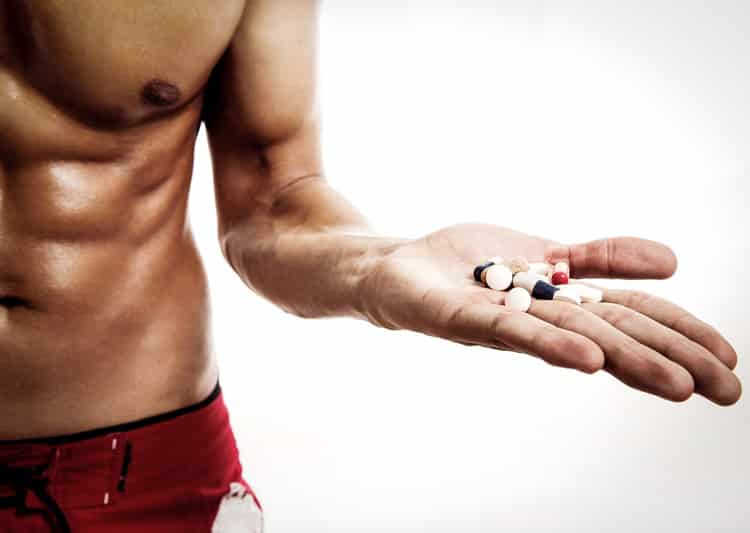
Standard dose for men over 40 with low DHEA-S is 25–50 mg/day, taken in the morning to mimic the natural circadian peak. Doses above 100 mg/day produce diminishing returns and exponentially increasing side effect risk.
For men under 35 with already-normal DHEA-S, supplementation is rarely worth the risk-reward. If you want to optimize hormonal status at this age, the best moves are addressing elevated SHBG, fixing vitamin D and zinc status, and using credentialed testosterone-boosting herbs like Tongkat Ali or fenugreek.
Cycle Length and Monitoring
If you do supplement, run 12-week cycles followed by 4-week breaks. Get baseline labs (total T, free T, estradiol, DHEA-S, prostate-specific antigen) before starting, recheck at week 12, and decide whether to continue based on objective data, not feel.
Side Effects and Contraindications
DHEA’s most common side effects are downstream of estrogen conversion: gynecomastia, water retention, acne, and oily skin. Prostate-related concerns make DHEA inappropriate for men with active or treated prostate cancer or PSA above 4 ng/mL.
Estrogen Problems Are the Main Risk
Because DHEA aromatizes readily, men who already run high estradiol — visceral fat, age-related aromatase upregulation, or genetic polymorphisms — will see those issues amplify. Track estradiol with the sensitive assay (LC/MS-MS), not the standard ECLIA.
HPG Axis Suppression
Long-term high-dose DHEA can suppress the body’s own LH/FSH signaling, which is the same mechanism that makes anabolic steroid cycles risky. The 100 mg+ doses some bodybuilders use compound this risk.
Drug Interactions
DHEA interacts with insulin, anti-estrogens, hormone-sensitive cancer treatments, and some antidepressants. Don’t combine without medical supervision.
The Bodybuilding Angle
Honest verdict: for muscle gain in young, healthy men, DHEA is a poor cost-benefit choice. Better options at this age are:
- Resistance training optimization (volume, intensity, progressive overload)
- Protein at 1.6–2.2 g/kg bodyweight
- Sleep over 7 hours nightly
- Address vitamin D, zinc, magnesium deficiencies
- Testosterone-boosting herbs if hormonally indicated
- Whole-food T-supportive nutrition
For men over 40 with a measured low DHEA-S, DHEA is a reasonable optimization tool — paired with the same foundation work above and ongoing lab monitoring. See our testosterone booster category breakdown for the full optimization framework.
Frequently Asked Questions
Does DHEA actually build muscle?
In men over 40 with low baseline DHEA-S and untrained or detrained status, modest gains are possible — driven mostly by the testosterone increase, not by DHEA itself. In young, healthy resistance-trained men, well-controlled trials show no meaningful muscle effect from typical doses.
Is DHEA safe?
At doses up to 50 mg/day for less than 12 weeks, DHEA is generally well tolerated in healthy men over 40. Risks rise sharply with higher doses, longer durations, and in men with prostate disease, hormone-sensitive cancers, or already-elevated estradiol. Always monitor labs.
Will DHEA fail a drug test?
DHEA itself is not on the WADA banned list at therapeutic doses, but many sports federations (NCAA, professional baseball, MMA organizations) prohibit any DHEA use. DHEA can also cause urinary T:E ratio shifts that trigger false positives for testosterone doping. Athletes subject to testing should not use DHEA.
What’s the difference between DHEA and 7-keto DHEA?
7-keto DHEA is a metabolite that does NOT convert to testosterone or estrogen. It’s marketed for fat loss and thyroid support but is functionally a different supplement. If your goal is androgen optimization, regular DHEA is the relevant compound; if your goal is metabolic support without hormonal effects, 7-keto is the variant to investigate.
Can women take DHEA for similar benefits?
Women’s response to DHEA is more nuanced — the same dose that produces 10–20% testosterone increase in men can produce 200–300% increase in women, with corresponding side effect risk (acne, hair growth, voice changes). Women should not use over-the-counter DHEA without medical supervision.