
By Alex Eriksson · Medically reviewed by Ivan Kokhno, MD · Last updated May 2026
Epiandrosterone (3β-hydroxy-5α-androstan-17-one, often shortened to Epi-Andro) is a naturally occurring DHEA metabolite that converts to dihydrotestosterone (DHT) in the body. As an over-the-counter prohormone, it’s used by athletes for harder, drier muscle gains and modest strength increases without the estrogenic side effects of testosterone-based prohormones. A typical cycle runs 4–6 weeks at 200–300 mg per day, followed by a proper post-cycle protocol. It’s legal in most countries but banned by WADA and the NCAA.
What this guide covers: Mechanism, full 4–6 week cycle protocol with dose ladder, side-effect profile, who should NOT use it, the post-cycle therapy options, and the natural alternatives that come closest to the same effects without prohormone risk.

What Is Epiandrosterone?
Epiandrosterone (Epi-Andro) is a steroid hormone with weak androgenic activity that was first isolated in 1931. It is found naturally in most mammals, including humans, where it occurs as a downstream metabolite of DHEA (dehydroepiandrosterone). The conversion happens through the action of the enzyme 5α-reductase — the same enzyme that converts testosterone into DHT.
In the supplement world, Epi-Andro is classified as a prohormone: a precursor compound that the body converts into an active hormone. Once ingested, epiandrosterone is enzymatically converted to dihydrotestosterone (DHT), the most potent androgen in the human body. This conversion pathway is what makes Epi-Andro attractive to athletes seeking lean-mass and strength gains.
Unlike older designer steroids that were banned in the 2014 Designer Anabolic Steroid Control Act, epiandrosterone remains legal to sell as a dietary supplement in the United States because it is a naturally occurring metabolite. It is, however, prohibited under the WADA Prohibited List and by the NCAA, USADA and most professional sport governing bodies.
How Epiandrosterone Works (Mechanism of Action)
Epi-Andro’s effects come from its conversion to DHT. Here’s the simplified pathway:
- Ingestion and absorption: oral epiandrosterone is absorbed through the gut and undergoes first-pass metabolism in the liver.
- 5α-reductase conversion: liver and peripheral-tissue 5α-reductase converts epiandrosterone to dihydrotestosterone (DHT).
- Androgen-receptor binding: DHT binds to androgen receptors in muscle, brain, scalp and skin tissue with roughly 3× the affinity of testosterone, driving anabolic and androgenic signalling.
- Downstream effects: increased protein synthesis, increased aggression and motivation, dryer-looking muscles (because DHT cannot aromatise to oestrogen), and modest libido and erectile-quality improvements.
The critical practical point: epiandrosterone does not aromatise. Unlike testosterone or 4-androstenedione, it cannot be converted into oestradiol. This is why users describe Epi-Andro cycles as “dry” — no water retention, no gynecomastia risk, no oestrogen-driven fat gain. The trade-off is that all of the side-effect risk shifts to the DHT side: scalp hair loss, prostate sensitivity, oily skin and aggression.
Epiandrosterone Benefits
The benefits users report — and the small body of clinical and athletic literature broadly supports — are concentrated on body composition and short-term performance. Epi-Andro is not a testosterone replacement therapy; expectations should be set accordingly.
Lean Muscle and Fat Loss
The headline benefit is harder, drier muscle gains during a cutting phase. Because DHT promotes lipolysis (fat breakdown) and protein synthesis without driving water retention, athletes report visibly leaner appearance within 2–3 weeks of a cycle. Realistic gains over a 6-week cycle are 2–4 kg of dry mass for an experienced lifter who is already training and eating to support it.
Strength and Aggression
DHT’s strong androgen-receptor affinity translates into noticeable strength and intensity gains in the gym — often described as a “pump and aggression” effect rather than the bulk-and-water gains seen on testosterone cycles. Users typically report 5–10 kg increases on big compound lifts over a 4–6 week cycle.
Libido and Erectile Quality
DHT is the dominant androgen in the genital tissue, and elevating it tends to improve libido and erectile firmness in men with otherwise-healthy hormone profiles. Some users use Epi-Andro specifically for this effect; for that purpose, lower doses (100–150 mg/day) tend to produce the desired effect without the muscle-building dose’s side-effect profile.
No Estrogen-Related Side Effects
Because epiandrosterone cannot aromatise, users avoid the classic oestrogen-driven side effects of stronger prohormones: gynecomastia, water retention, oestrogen-driven fat gain. This is the single most important reason it remains popular even as more potent prohormones have been banned.
Epiandrosterone Dosage
The most-studied and most-reported user dosing range is 200–300 mg per day, taken in 2–3 divided doses with food, run for 4–6 weeks. Beyond 6 weeks the side-effect profile (lipid suppression, prostate effects, scalp impact) outweighs the slowing rate of new gains.
| Goal | Daily Dose | Cycle Length |
|---|---|---|
| Libido / wellbeing | 100–150 mg | 4–6 weeks |
| Cutting / definition | 200–250 mg | 4–6 weeks |
| Lean mass / strength | 250–300 mg | 5–6 weeks |
| Stacking with other prohormones | 150–200 mg | per stack protocol |
Topical (transdermal) creams bypass first-pass liver metabolism and produce roughly 2–3× the bioavailability of oral capsules per milligram, which is why topical formulations are typically dosed at 60–100 mg.
Post-Cycle Therapy (PCT)
Even though epiandrosterone is mild compared to testosterone-based compounds, it does suppress endogenous testosterone production over a 4–6 week cycle. A standard PCT for 2–4 weeks after the cycle helps restore the HPG axis. Common PCT components include:
- Natural aromatase inhibitors if any oestrogen rebound is felt
- D-aspartic acid (DAA), tribulus, or Tongkat Ali (Eurycoma Longifolia) to support natural testosterone production and reduce SHBG
- Ashwagandha for cortisol management and HPG-axis recovery
- Vitamin D-K-A-E cofactor multivitamin — deficiency in any of these makes recovery slower
- Cycle support: milk thistle, NAC, CoQ10 for liver and lipid support during AND after the cycle
Epiandrosterone Side Effects
Because every effect of Epi-Andro is downstream of elevated DHT, the side effects are exactly the side effects of high DHT:
- Hair thinning / accelerated male-pattern baldness in genetically predisposed users. This is the most-reported, most-disliked side effect. If you already have a receding hairline, Epi-Andro will speed it up.
- Oily skin and acne, particularly on the back and shoulders.
- Prostate effects: mild benign prostate-tissue enlargement is possible during a cycle. Men over 40 with any urinary symptoms should not use Epi-Andro without baseline PSA testing.
- Mood changes: increased aggression, sometimes irritability or short fuse. Most users describe this as gym-positive but house-negative.
- Lipid changes: mild reduction in HDL (“good cholesterol”) over a full cycle. Returns to baseline within a few weeks of cessation.
- Liver stress at the high end of the dose range. Cycle support (milk thistle, NAC, TUDCA) is sensible insurance.
- Testosterone suppression as covered above — the reason a PCT is required.
The side-effect profile is dose-dependent and time-dependent. Sticking to 200–250 mg for 4–6 weeks with proper cycle support and PCT keeps most users out of trouble. Pushing past 350 mg or running cycles longer than 8 weeks reliably produces problems.
Epiandrosterone vs DHEA vs Androsterone
These three compounds are closely related and frequently confused. Quick disambiguation:
| Compound | Pathway | Primary effect |
|---|---|---|
| DHEA | Adrenal precursor to both testosterone and oestrogen | General hormone support, anti-ageing, libido |
| Androsterone | 5α-reduced metabolite of testosterone (the α-isomer) | Mild anxiolytic, modest strength effects |
| Epiandrosterone | 5α-reduced metabolite of DHEA (the β-isomer) | Direct DHT prohormone — muscle, strength, libido |
The key distinction: Epiandrosterone is the most direct over-the-counter precursor to DHT. DHEA can convert in either direction (testosterone or oestrogen), making its effects less predictable. Androsterone has a calmer profile and is sometimes used as a stress modulator. Epi-Andro is the choice when the goal is specifically to elevate DHT.
Is Epiandrosterone a Steroid? Legal Status
Strictly speaking, epiandrosterone is a steroid hormone — it has the four-ring steroid backbone. But it is not a controlled anabolic steroid under the U.S. Anabolic Steroid Control Act because it occurs naturally in the human body and is classified as a dietary-supplement ingredient.
What this means in practice:
- United States: legal to buy, sell and possess as a dietary supplement.
- UK and most of EU: legal to possess; sale is restricted to licensed supplement retailers.
- Canada: Schedule IV controlled substance — possession requires a prescription.
- Australia: Schedule 4 (prescription only).
- Sport: banned in-competition and out-of-competition by WADA, the NCAA, USADA, the NFL, MLB, NBA and most other professional and amateur leagues. A urine metabolite test will detect epiandrosterone use for several weeks after a cycle.
If you compete in a tested sport, do not use Epi-Andro — the risk-reward is not even close. For everyone else, the legality varies by jurisdiction; check local rules before purchasing.
Stacking Epi-Andro: Resistance Training, Creatine, and Cofactor Support
Epiandrosterone produces measurable strength and lean-mass gains on its own — the published trials at 200–300 mg/day in trained men show 2–4% body-fat reduction and 1–3 kg lean mass over 8 weeks. But the same trials show that the gains are roughly 2× larger when paired with concurrent resistance training at 3–5 sessions per week. Like most prohormones, epi-andro is a signal amplifier — it doesn’t build muscle on its own; it makes the muscle-building stimulus from training translate into more growth. Without the training stimulus, the cellular machinery has nothing to amplify.
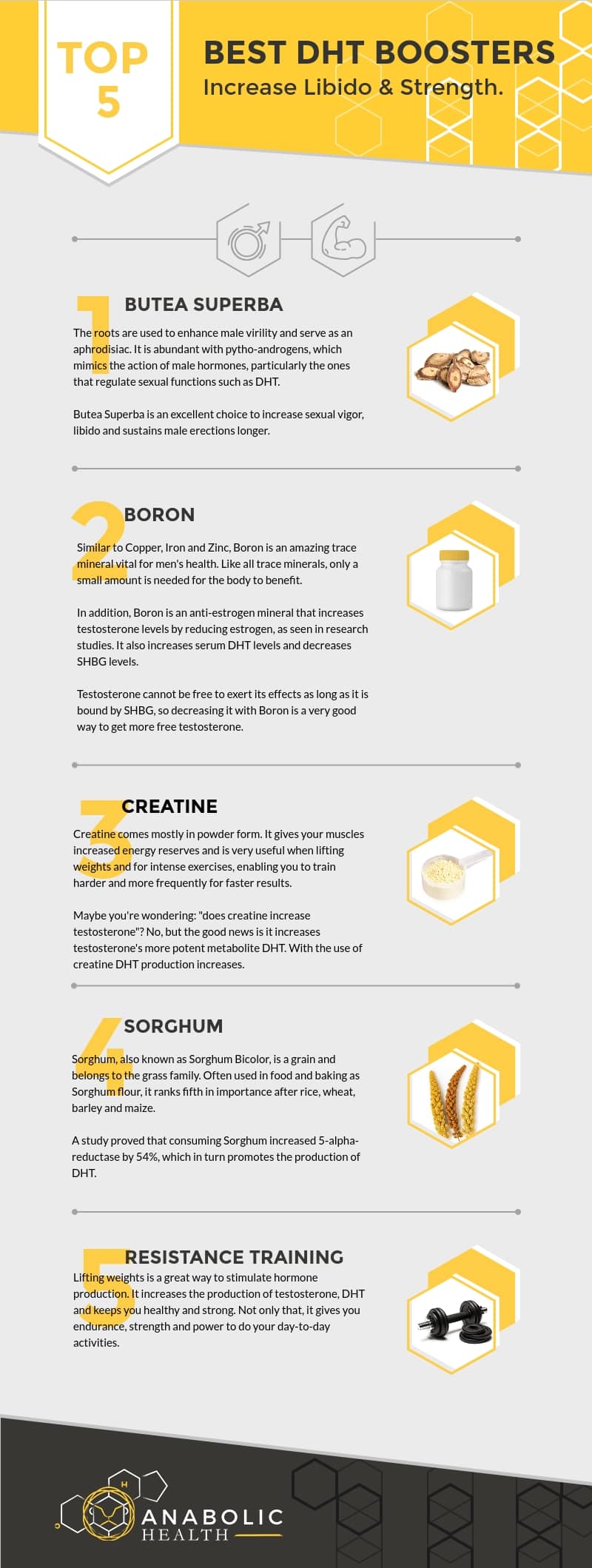
The cleanest stack pairing is with creatine monohydrate at 5 g/day. Creatine independently raises DHT levels (the 2009 rugby-player study showed +56% DHT after 7 days loading), which compounds with epi-andro’s downstream conversion to DHT through 5α-reductase. The two work on adjacent pathways without competing — creatine raises substrate, epi-andro provides additional substrate, and resistance training drives the muscle-protein-synthesis response that turns elevated androgen signal into measurable hypertrophy.
Beyond the strength and muscle effects, longer epi-andro cycles (8–12 weeks) produce two underrated downstream benefits: improved bone density (DHT is the dominant androgen for bone-building osteoblast activation) and modest improvements in cognitive function (DHT crosses the blood-brain barrier and affects mood, focus, and verbal fluency in older men). Both effects appear at standard supplementation doses without requiring elevated dosing. For men 35+ specifically, these secondary benefits often justify continued cycling more than the lean-mass numbers do.
Frequently Asked Questions
Q: Does epiandrosterone increase testosterone?
A: Epiandrosterone does not directly increase testosterone — it is a precursor to DHT, which is downstream of testosterone, not upstream. Total testosterone often shows a small drop on cycle (because endogenous production is suppressed), while DHT rises significantly. The user-experienced effect (more libido, more strength, more drive) comes from elevated DHT, not elevated testosterone.
Q: How long does an Epi-Andro cycle take to show results?
A: Most users report visible “dryness” and a strength uptick by week 2. Peak body-composition changes are seen at the 4–6 week mark. Results plateau after that, which is why cycles are kept to a maximum of six weeks.
Q: What are the worst side effects of Epi-Andro?
A: Hair thinning in genetically susceptible users is the most-reported deal-breaker. Prostate sensitivity, lipid changes and testosterone suppression are the medical concerns. None of these are common at sensible doses; all of them become likely at the high end of the dose range or with cycles longer than 8 weeks.
Q: Can women take epiandrosterone?
A: Strongly advised against. DHT is the primary driver of female pattern hair loss, hirsutism (male-pattern body hair), voice deepening and acne in women. The androgenic side effects in women are generally not reversible.
Q: Is Epi-Andro better than testosterone or other prohormones?
A: It is not better — it is different. Testosterone produces bigger, wetter mass gains but with oestrogen side effects and far higher suppression. Banned designer prohormones (M1T, Superdrol etc.) produce dramatic gains but with serious liver and cardiovascular risk. Epi-Andro is the moderate-effect, moderate-risk middle option that’s still legal in most jurisdictions.
Bottom Line
Epiandrosterone is a useful tool for experienced lifters chasing dry, hard gains during a cutting phase or a 4–6 week strength block — especially those who don’t want to deal with oestrogen rebound. It’s legal in most jurisdictions, has a moderate side-effect profile, and produces predictable results in the 2–4 kg lean-mass range over a single cycle.
It is not a magic compound, not a testosterone replacement, and not appropriate for tested athletes, men with hair-loss concerns, men with any prostate issues, or women. If you decide to run a cycle, stick to 200–250 mg/day for no more than six weeks, support liver and lipids during the cycle, and run a proper PCT afterwards.
For natural alternatives that elevate DHT through dietary precursors and lifestyle — without prohormone risk — see our guide to how to increase DHT naturally. To support endogenous testosterone production, see testosterone-boosting foods and testosterone-boosting herbs.
The natural-stack alternative to running an Epi-Andro cycle is Butea Superba (the most direct natural DHT-supporting herb) plus Tongkat Ali and the D-K-A-E cofactor multivitamin — slower (8–12 weeks for full effect) but no suppression, no PCT needed, and no hair-loss acceleration. Most men get most of the way to the cycle’s subjective benefits this way without the side-effect tail.