By Alex Eriksson · Medically reviewed by Ivan Kokhno, MD · Last updated May 2026
Eucommia bark (Eucommia ulmoides, also known as Du Zhong) is a Chinese traditional herb that has plant-derived androgenic compounds, modest testosterone-supporting effects, and clinically documented benefits for blood pressure, joint pain and erectile function. It’s not a heavy-hitting prohormone like Epi-Andro or Tongkat Ali, but as part of a stack it adds mild androgenic and circulatory support — useful for older men chasing both testosterone and joint/cardiovascular benefits in one herb. Typical dose: 500–1,500 mg of standardised extract per day.
The full breakdown below: Mechanism (androgen receptor binding + cardiovascular pathways), dose ranges from the controlled trials (3–6g raw bark or 500–1000mg standardized extract), the four use cases with the strongest evidence (testosterone, blood pressure, joint health, erectile function), and how it stacks with Tongkat Ali and Butea Superba.
What Is Eucommia Bark?
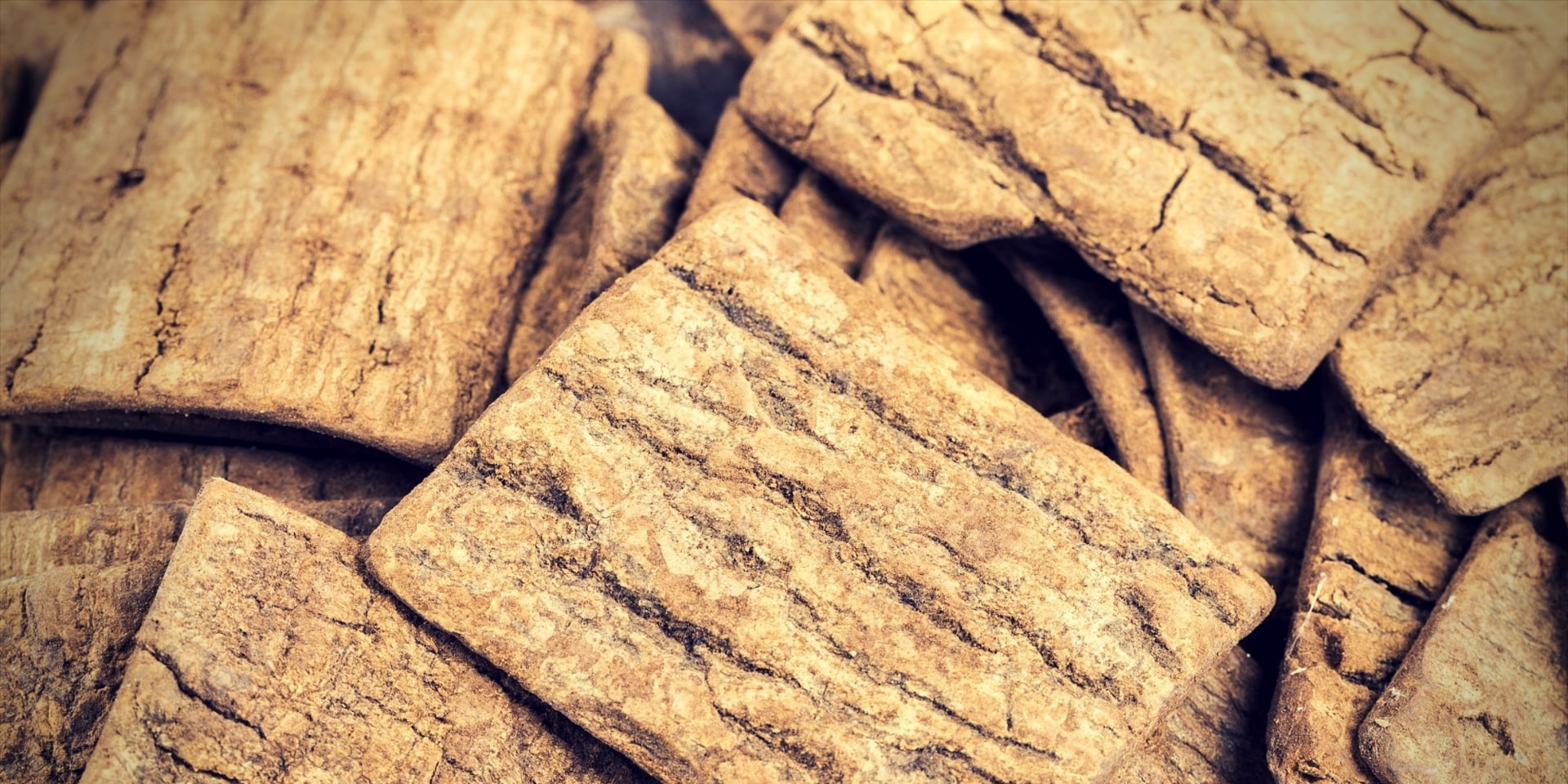
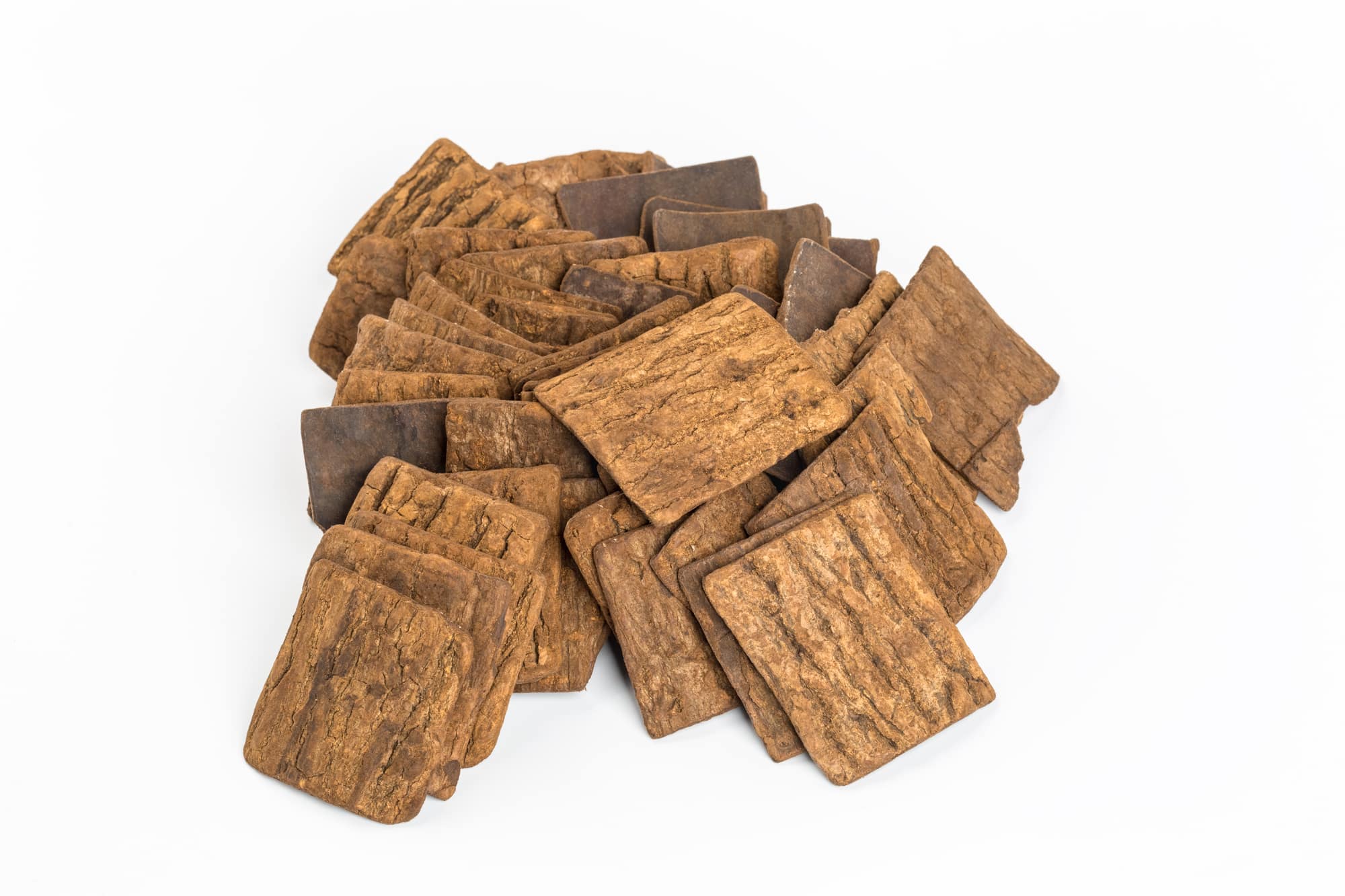
Eucommia ulmoides is a deciduous tree native to central China, prized for its bark since the earliest written Chinese medical texts. The dried bark, known as Du Zhong, is a foundational herb in Traditional Chinese Medicine (TCM) where it’s used to “tonify the kidneys” — in TCM framing, the kidney is the seat of essence (jing), libido, growth and reproductive power. Modern translation: it’s used for low libido, weak erections, joint and lower-back pain, fatigue, and the cluster of symptoms Western medicine bundles into “andropause.”
The active compounds include lignans, iridoids (notably aucubin and asperuloside), flavonoids, and a unique class of plant-derived androgenic compounds — phytoandrogens that bind weakly to the androgen receptor without being converted from cholesterol. This is the unusual property that makes eucommia interesting: most “natural testosterone” herbs work upstream (raise LH or lower SHBG); eucommia appears to interact with androgen receptors more directly.
Eucommia Bark and Testosterone
The testosterone-supporting effects of eucommia bark come from three mechanisms working together:
- Phytoandrogen activity: compounds in eucommia bind weakly to androgen receptors, producing modest androgen-like signalling without elevating endogenous testosterone synthesis. Effect is subtle but real over 8–12 weeks.
- Anti-inflammatory effect: aucubin and the iridoid class lower systemic inflammation, which removes one of the biggest indirect testosterone suppressors (chronic inflammation downregulates the HPG axis).
- Improved circulation: eucommia is one of the most well-documented herbs for blood-pressure reduction and improved peripheral circulation. Better blood flow to the testes correlates with better steroidogenesis.
Animal studies show measurable testosterone elevation; human clinical data is thinner but supports the bodybuilding-community reports of better gym output, recovery and libido at 1–1.5 g of standardised extract per day for 8–12 weeks.
For the broader natural-androgen-support picture — herbs and supplements that actually move the needle — see our guides to testosterone-boosting herbs and how to increase DHT naturally.

Other Benefits of Eucommia Bark
Beyond the modest testosterone effect, eucommia has the most published research of any TCM herb in two specific areas:
Blood Pressure Reduction
Multiple Chinese clinical studies have demonstrated meaningful blood-pressure reduction at 1–2 g/day of standardised extract over 4–12 weeks — comparable to first-line antihypertensive drugs in mild-to-moderate hypertension. The mechanism is vasodilation via increased nitric oxide bioavailability. This makes eucommia uniquely useful for older men whose testosterone work is complicated by mildly elevated blood pressure (a common combination after age 45).
Joint, Bone and Lower-Back Health
Eucommia’s traditional reputation as a “back and bone” tonic has modern validation: lignans and iridoids reduce inflammation, support cartilage, and improve bone-mineral density in postmenopausal models. For men with the classic “weight-room joints” (chronic knee, lower-back, shoulder issues from years of training), eucommia stacks well with collagen and curcumin for joint support without the GI cost of NSAIDs.
Erectile Function
The combination of mild androgen receptor activity, improved circulation and lowered inflammation produces measurable erectile-quality benefit. This is more useful for men whose ED has a circulatory component (older men, men with mild hypertension or insulin resistance) than for purely psychogenic or low-T-driven ED.
Adaptogen and Stress Modulation
Eucommia is classified as a mild adaptogen — less powerful than ashwagandha or rhodiola, but it stacks well with both. Useful for the cortisol-management piece of the broader testosterone-recovery picture.
Eucommia Bark Dosage
The published clinical doses cluster around 500–1,500 mg of standardised eucommia ulmoides extract per day, divided into 2–3 doses with food. Higher doses (up to 3 g/day) are well tolerated but offer diminishing returns.
| Goal | Daily Dose | Cycle Length |
|---|---|---|
| General wellness / mild adaptogen | 500–750 mg | Continuous |
| Testosterone / bodybuilding support | 1,000–1,500 mg | 8–12 weeks on, 2 weeks off |
| Blood pressure / cardiovascular | 1,000–2,000 mg | Continuous, with monitoring |
| Joint / lower back support | 1,000–1,500 mg | 8–12 weeks |
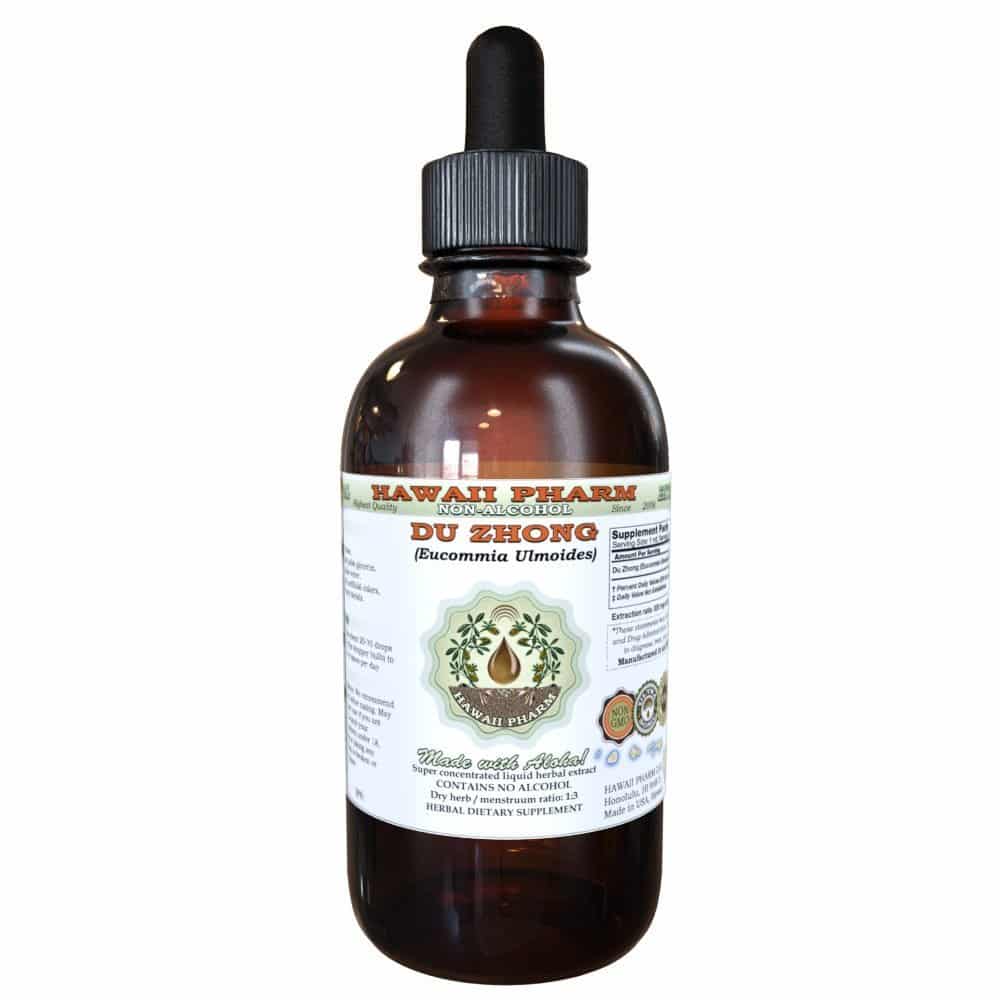
Forms include capsules, powder (mixed into tea or smoothies), liquid extract (the form most often used in bodybuilding stacks), and decoction (TCM-traditional method — simmered into tea for 30 min).
Side Effects and Safety
Eucommia bark is one of the safest herbs in the male-tonic category. Side effects at therapeutic doses are uncommon and generally mild:
- Mild GI discomfort — loose stools or stomach upset at the high end of the dose range; resolves with food or split dosing.
- Drowsiness — reported by some users at high doses; take in the evening if it bothers you.
- Hypotension — the same blood-pressure-lowering effect that makes it useful can become problematic if you’re already on antihypertensive medication. Talk to your doctor before adding it to ACE inhibitors, beta blockers, or calcium channel blockers.
- Bleeding risk — theoretical concern with anticoagulant use; stop 1–2 weeks before surgery.
Avoid eucommia entirely if you’re on anticoagulants without medical supervision, if you have low blood pressure already, or if you’re pregnant or breastfeeding.
How to Use Eucommia in a Testosterone-Support Stack
Eucommia is a supporting cast member, not a leading actor. As a stand-alone “testosterone booster” it’s underwhelming compared to Butea Superba or Tongkat Ali. As part of a stack for an older man chasing both testosterone AND cardiovascular/joint benefits, it punches above its weight.
Three sensible stacks:
- Testosterone + circulation stack: eucommia 1,000 mg + Butea Superba 500 mg + Black Ginger (Kaempferia Parviflora) 250 mg. The Butea Superba does the direct DHT/androgen work; Black Ginger handles circulation; eucommia adds the joint/blood-pressure layer.
- Andropause / 45+ stack: eucommia 1,500 mg + Tongkat Ali 300 mg + Ashwagandha 600 mg + the D-K-A-E cofactor multivitamin. Tongkat handles free testosterone and SHBG; ashwagandha handles cortisol; eucommia handles inflammation, joints and circulation.
- Bodybuilding cycle support: eucommia 1,500 mg during cycles where joint stress is high; pairs with creatine and standard cycle support to keep training output up while reducing inflammatory cost.
How Eucommia Works at the Cellular Level: Leydig Cells, Lignans, and the Steroidogenic Pathway
The published mechanism for eucommia’s testosterone effect is more specific than most herbal-supplement claims. The 2022 Nature Scientific Reports study (Chen et al.) on Eucommia ulmoides staminate flower extract showed direct stimulation of Leydig cells — the testosterone-producing cells in the testes — with two specific active compounds identified: kaempferol (a flavonoid) and geniposidic acid (an iridoid glycoside). Both increase Leydig-cell testosterone secretion in vitro and in animal models, with measurable elevation of serum testosterone in mice within 4 weeks of supplementation.
The steroidogenic pathway is the multi-step enzymatic process that converts cholesterol into testosterone. Eucommia’s bioactive compounds appear to upregulate two key enzymes in that pathway (StAR protein and CYP17A1) at the gene-expression level — meaning the effect is partly transcriptional, not just an acute receptor binding event. This is why eucommia produces measurable benefits over weeks rather than within hours like a stimulant herb.
Eucommia bark contains a different bioactive profile than the leaves and staminate flowers, dominated by lignans (specifically pinoresinol diglucoside) and additional iridoids (aucubin, geniposidic acid). These lignans have well-documented blood-pressure-lowering effects and appear to modulate the same androgen-receptor and aromatase pathways that drive the testosterone-balance signal. The synergy of all three compound classes — flavonoids + lignans + iridoids — explains why whole-bark extracts often outperform isolated single compounds in trials, even though the individual molecules are well characterised.
Frequently Asked Questions
Q: Does eucommia bark really raise testosterone?
A: Modestly, yes — but not dramatically. Animal studies show measurable testosterone elevation; human data is thinner but bodybuilding-community reports support better gym output, recovery and libido at 1–1.5 g/day standardised extract over 8–12 weeks. Treat it as a supporting compound, not a primary testosterone booster.
Q: How long does it take eucommia bark to work?
A: Blood-pressure and joint-pain effects are often noticeable within 2–4 weeks. Testosterone-support and erectile-function effects take longer — expect 6–8 weeks of consistent dosing before judging the libido and gym effect, and 12 weeks for the full picture.
Q: Can I take eucommia with blood pressure medication?
A: Only with your doctor’s knowledge. Eucommia lowers blood pressure on its own; combining it with ACE inhibitors, beta blockers, calcium channel blockers or diuretics can produce hypotension. If you’re on antihypertensives, talk to your prescribing clinician before adding eucommia, and monitor your blood pressure during the first 4 weeks.
Q: What’s the difference between eucommia bark and Tongkat Ali?
A: They work through different mechanisms. Tongkat Ali raises free testosterone and reduces SHBG — a direct testosterone-elevation play. Eucommia has weak phytoandrogen activity plus broad cardiovascular and anti-inflammatory effects. Tongkat Ali is the stronger testosterone tool; eucommia is the stronger overall-wellness tool. They stack well.
Q: Is eucommia bark safe for daily long-term use?
A: Yes, for most men. Eucommia has one of the cleanest safety profiles in the TCM herb category and has been consumed for centuries. The main exceptions are men on blood-pressure medications (interaction risk), men on anticoagulants (theoretical bleeding risk), and pregnant or breastfeeding women (insufficient safety data).
Bottom Line
Eucommia bark is the practical “more than a herbal cliché but not a heavy hitter” choice in the natural-androgen support category. It does five things competently — mild testosterone support, real blood-pressure reduction, joint and bone support, modest erectile improvement, mild stress modulation — rather than one thing dramatically. That makes it most useful for men over 40 chasing the broader picture rather than maximum testosterone alone.
Stacked with Butea Superba for direct androgen support and Tongkat Ali for free testosterone, eucommia adds the cardiovascular and joint layer that older lifters need but rarely get from single-purpose “T-boosters.” For 45+ men with mildly elevated blood pressure or chronic training-induced joint complaints, it’s often the missing piece.
For the broader optimisation picture, see testosterone-boosting herbs, how to increase DHT naturally, and our review of the best estrogen blockers for men if oestrogen control is also part of your picture.