
Medically reviewed by Ivan Kokhno, MD — Research analysis by Alex Eriksson · Updated May 2026
The CBD and testosterone evidence is mixed and complicated. Animal studies (mostly rat) show high-dose CBD can suppress testosterone synthesis through Leydig cell effects and possibly aromatase modulation. Human evidence is limited and contradictory: some studies suggest mild T suppression at high chronic doses, others find no significant effect at typical doses (25–75 mg/day used for anxiety). Indirect effects matter too: CBD reduces cortisol (positive for T), improves sleep (positive for T), but at high doses inhibits CYP enzymes affecting steroid metabolism.
The honest framing: at typical anxiety/sleep doses (25–75 mg/day), CBD’s net effect on testosterone is probably neutral or mildly positive (via cortisol/sleep). At high doses (above 200–300 mg/day chronically), there’s reasonable concern about T suppression based on animal data. Most CBD users at typical doses don’t experience measurable T impact. For men prioritising T, ashwagandha has substantially better cortisol-and-T data than CBD; CBD is reasonable for anxiety/sleep applications without expecting T benefit. Below: full mechanism, the human evidence honest assessment, dosing, and where CBD fits.
In the US, there’s a fairly new reason why men are taking CBD testosterone. Yes, some of those who want to naturally support the hormone are going for this non-psychoactive cannabinol.
For the cautious though, there’s always the question of whether it really works for that purpose. After all, there are cases in which men suffered from low testosterone production after enjoying weed.
CBD Testosterone
- Clearing a Misconception
- Lowered Hormone Levels
- Should You Follow Suit?
- Reduces Anxiety and Stress
- Accelerates Weight Loss
- Reverses Brain Damage
- Fights Inflammation
- Are There Any Side Effects?
- The Challenge in Choosing
Clearing a Misconception
Before we continue, let’s make one thing clear—weed and Cannabidiol (CBD) are definitely not the same thing. CBD is just one of the many compounds in Cannabis plant, hemp, or weed.
CBD is extracted from hemp plants, specifically those kinds known to have high amounts of the compound. It’s only due to this specific quality that pure CBD hemp oil can be profitably produced, especially when yield is considered.
Currently, there are more than 80 different types of cannabinoids discovered in hemp. What’s more, among these cannabinoids is tetrahydrocannabinol (THC)—which, as you might have heard, is responsible for the “high” often associated with weed.
If you’re going to take CBD cannabinoid oil, you really won’t have to worry about the ill effects of its psychoactive compound. You won’t be introducing THC into your system and you’ll be targeting other cannabinoid receptors.
Simply put, CBD and THC are compounds that are entirely different yet somewhat related, mainly due to their source.
Lowered Hormone Levels
Now, let’s clear up another misguided notion—that CBD lowers the male hormone’s levels. As mentioned, some of those who have been smoking marijuana for therapeutic purposes have noticed a drop in their testosterone levels.
This isn’t among the effects of CBD, but is instead caused by THC. The psychoactive compound prevents the hypothalamus from secreting sufficient amounts of gonadotropin-releasing hormone (GnRH).
GnRH facilitates the release of two other important hormones, namely luteinizing hormone (LH) and follicle-stimulating hormone (FSH). This matters since LH signals for the secretion of testosterone, while FSH initiates sperm production.
Does this mean that the effects of cannabidiol are all positive? Truth be told, the compound hinders testosterone production—which is why some choose to avoid it while working on their hormonal balance.
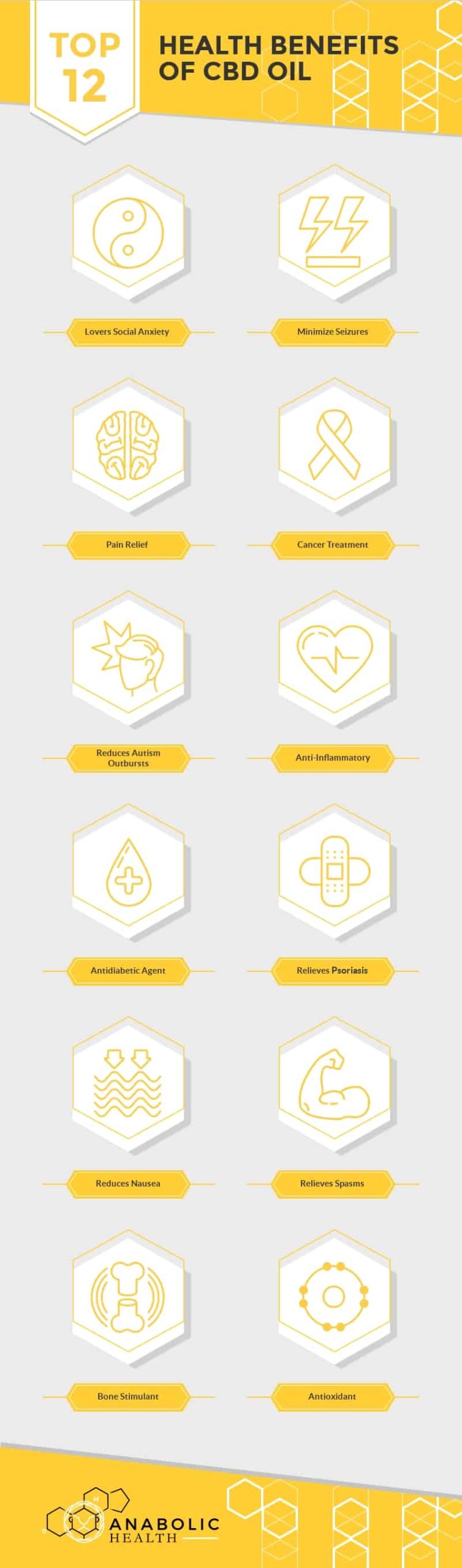
Cannabidiol offers outstanding benefit and it’s worth trying a CBD product if you’re having low testosterone levels. We explain key benefits in this article.
Should You Follow Suit?
We believe that you shouldn’t avoid CBD just because of that effect. Despite slowing the pace at which the male hormone gets produced, cannabidiol offers a remarkable benefit—it keeps testosterone from getting oxidized in the liver.
When CBD gets oxidized, it’s broken down or, in other words, rendered useless—this is likely among the reasons why despite affecting hormone production, the compound doesn’t have an impact on serum testosterone.
Aside from keeping your testosterone intact while in the liver, CBD products offer an assortment of perks that could enhance the hormone’s levels as well as improve your overall health. Here are a few good examples:

Reduces Anxiety and Stress
One of the best reasons to take this cannabinoid lies in its capacity to reduce both stress and anxiety. These two are synonymous with elevated levels of cortisol—a hormone that has an inverse relationship with testosterone.
So, whenever you feel stressed out or anxious, the androgen’s levels actually plummet. Things only become worse when these periods of stress and anxiety are prolonged or become a seemingly normal part of your daily life.
By staying relaxed with the help of CBD, you protect your sex hormones from the effects of cortisol. What’s more, the cannabinoid compound doesn’t just keep you calm—it also interferes with the production of the stress hormone.
It’s so potent against stress and anxiety that it’s being considered for use against post-traumatic stress disorder.
Accelerates Weight Loss
It’s also possible to overcome obesity through CBD and testosterone. If you’re currently not happy with your body and you’re trying to keep yourself from eating too much, the compound’s appetite-suppressing effect will prove valuable.
As for testosterone, well, if you have enough of it in your system, you’ll get to enjoy faster muscle growth and reduced fat accumulation. This is why men with low androgen levels are much more likely to become obese.
Reverses Brain Damage
Yes, cannabidiol can reverse brain damage. Although this has only been tested in relation to excessive alcohol consumption, it does highlight the possibility that CBD can help in treating neurodegenerative diseases.
What does this have to do with male health though? Neurodegenerative diseases (such as Alzheimer’s disease) are frequently linked with erectile dysfunction, which definitely has an effect on a man’s quality of life.
Aside from that, not having enough testosterone in your system makes your brain more susceptible to oxidative damage—and that’s the kind of damage that could very well lead to the development of neurological disorders.
Fights Inflammation
CBD is known to reduce swelling. In fact, patients suffering from chronic pain and inflammation take it orally to get relief, while those with swollen joints or muscles typically use it in cream form.
What makes the compound so potent against inflammation is that it works in multiple ways. Aside from getting rid of unneeded immune cells, it also suppresses the very chemicals that run the inflammatory pathway.
Are There Any Side Effects?
Just like any other product, CBD can cause side effects when taken in excessive amounts. Taking high doses might lead to even more problems with your hormone levels.
The best way to avoid side effects when taking CBD is to consult your doctor first. Beside, you might be asked to undergo a testosterone test to find out what causes your hormonal imbalance.
Aside from protecting your testosterone, CBD (cannabidiol) offers anti-inflammatory effects, boasts neuroprotective properties, reverses brain damage, and reduces anxiety disorders. It’s even used against prostate cancer.
The Challenge in Choosing
Anyhow, it’s not difficult to find cannabidiol oil products on the market today. The only challenge you’ll probably face is choosing the right one in order to get the exact results you want.
Make sure that you get something free from any sort of impurity or contamination. Also, go for those that are guaranteed to only contain cannabidiol, and not have any trace of THC.
Feel free to try various CBD products, but we recommend CBDPure. Since it’s made of pure hemp oil extract to provide high-quality CBD, testosterone and health improvements are practically guaranteed.
Where CBD Fits in a Male Health Stack
CBD is reasonable for anxiety/sleep at typical doses; not a primary T tool. The cleanest practical layering:
- For cortisol/anxiety/T-supportive stress reduction: Ashwagandha 600 mg/day KSM-66 (the Wankhede 2015 trial showed 14.7% T elevation + 46% strength gain through cortisol reduction). Ashwagandha has substantially better T evidence than CBD.
- If using CBD for anxiety/sleep: 25–75 mg/day (low end of studied range) minimises any potential T-suppressive effects while preserving anxiolytic benefits. Avoid chronic high-dose (200+ mg/day) if T optimisation is a goal.
- Substrate / hormonal foundation: Tongkat Ali 200–400 mg/day for testosterone substrate.
- Direct DHT: Butea Superba for downstream signal.
- Foundational vitamins: Anabolic Octane (D-K-A-E) for vitamin D + K2 + A + E.
For deeper protocols, see how to use CBD oil for anxiety, CBD oil for weight loss, best CBD vape oils, marijuana and testosterone, ashwagandha and testosterone, and best supplements for men over 40.
The AH Stack-Friendly SKUs
- Ashwagandha — substantially better T-and-cortisol evidence than CBD; the Wankhede 2015 data.
- Tongkat Ali (Eurycoma longifolia) — testosterone substrate herb.
- Butea Superba — direct DHT and erection-quality support.
- Anabolic Octane (D-K-A-E) — foundational T-supportive cofactors.
Frequently Asked Questions
Q: Does CBD lower testosterone?
A: Mixed evidence. Animal studies show high-dose CBD can suppress T through Leydig cell effects. Human data is more limited and inconsistent. At typical anxiety/sleep doses (25–75 mg/day), most studies don’t show meaningful T suppression. At high chronic doses (200+ mg/day), concern is more reasonable. Net effect at typical use is probably neutral or mildly positive (via cortisol/sleep effects).
Q: Can I use CBD if I’m trying to optimise testosterone?
A: At typical anxiety/sleep doses (25–75 mg/day), yes — the cortisol/sleep benefits likely outweigh any subtle T-suppressive effects. Avoid chronic high-dose CBD (200+ mg/day) if T optimisation is a goal. For men specifically prioritising T, ashwagandha provides similar cortisol benefit with better-documented T elevation in human trials.
Q: Does CBD affect sperm count or fertility?
A: Animal studies suggest possible negative effects on sperm parameters at high doses; human evidence is limited. If trying to conceive, the cautious approach is to limit CBD use during the trying-to-conceive period (3-6 months) given how easy it is to remove and how slow sperm parameter recovery would be if affected.
Q: CBD vs THC effects on testosterone?
A: THC has clearer T-suppressive effects in heavy users (see /marijuana-and-testosterone/). CBD’s effects appear smaller and more dose-dependent. CBD doesn’t produce the acute LH suppression that THC does. For men using cannabis products, CBD-only formulations are likely less T-impacting than THC-containing products at equivalent total cannabinoid intake.
Q: How can I tell if CBD is affecting my testosterone?
A: Get baseline blood work (total + free T, LH, FSH, estradiol) before starting chronic CBD use. Re-test at 3–6 months. For typical anxiety/sleep doses, expect minimal or no measurable change. If you notice symptoms of low T (fatigue, low libido, mood changes) on chronic CBD use, retest and consider dose reduction or discontinuation. Symptom-tracking alone is unreliable; objective measurement matters.