

The natural PDE5 inhibitors with the strongest clinical evidence are icariin (from horny goat weed, the most potent natural PDE5 binder identified in vitro), Kaempferia parviflora (Black Ginger, with human-trial data on erection hardness), Tribulus terrestris, Panax ginseng, and L-citrulline (precursor to L-arginine, which fuels the same nitric oxide pathway sildenafil amplifies). None reach pharmaceutical potency, but the better-evidenced options produce measurable improvements on the IIEF erectile-function score in randomized placebo-controlled trials.
The honest framing: sildenafil and tadalafil are 100–1000× more potent than the strongest natural PDE5 inhibitor at the enzyme level. Natural options work best for mild-to-moderate ED in men with healthy vascular function, and as long-term hormonal-foundation support — not as on-demand erectile rescue. Full mechanism + 10 evidence-ranked options below.
Medically reviewed by Michael Jessimy, RPh — Research analysis by Alex Eriksson. Last updated May 2026.
Phosphodiesterase type 5 (PDE5) inhibitors are the class of compounds behind erectile-dysfunction drugs like Viagra and Cialis. They work by blocking the enzyme that breaks down cGMP, the molecule that lets blood vessels in the penis relax and fill. Several plants, herbs, and amino acids do the same thing — without the prescription, the cost, or the side-effect profile of the synthetic versions. Below are 10 natural PDE5 inhibitors backed by published research, ranked by the strength of evidence and how reliably they appear in human trials.
How Natural PDE5 Inhibitors Work
When you become aroused, your nervous system releases nitric oxide. Nitric oxide triggers production of cyclic guanosine monophosphate (cGMP), and cGMP relaxes the smooth muscle in penile blood vessels — that’s the erection. The PDE5 enzyme then breaks cGMP back down, which is why erections don’t last forever.
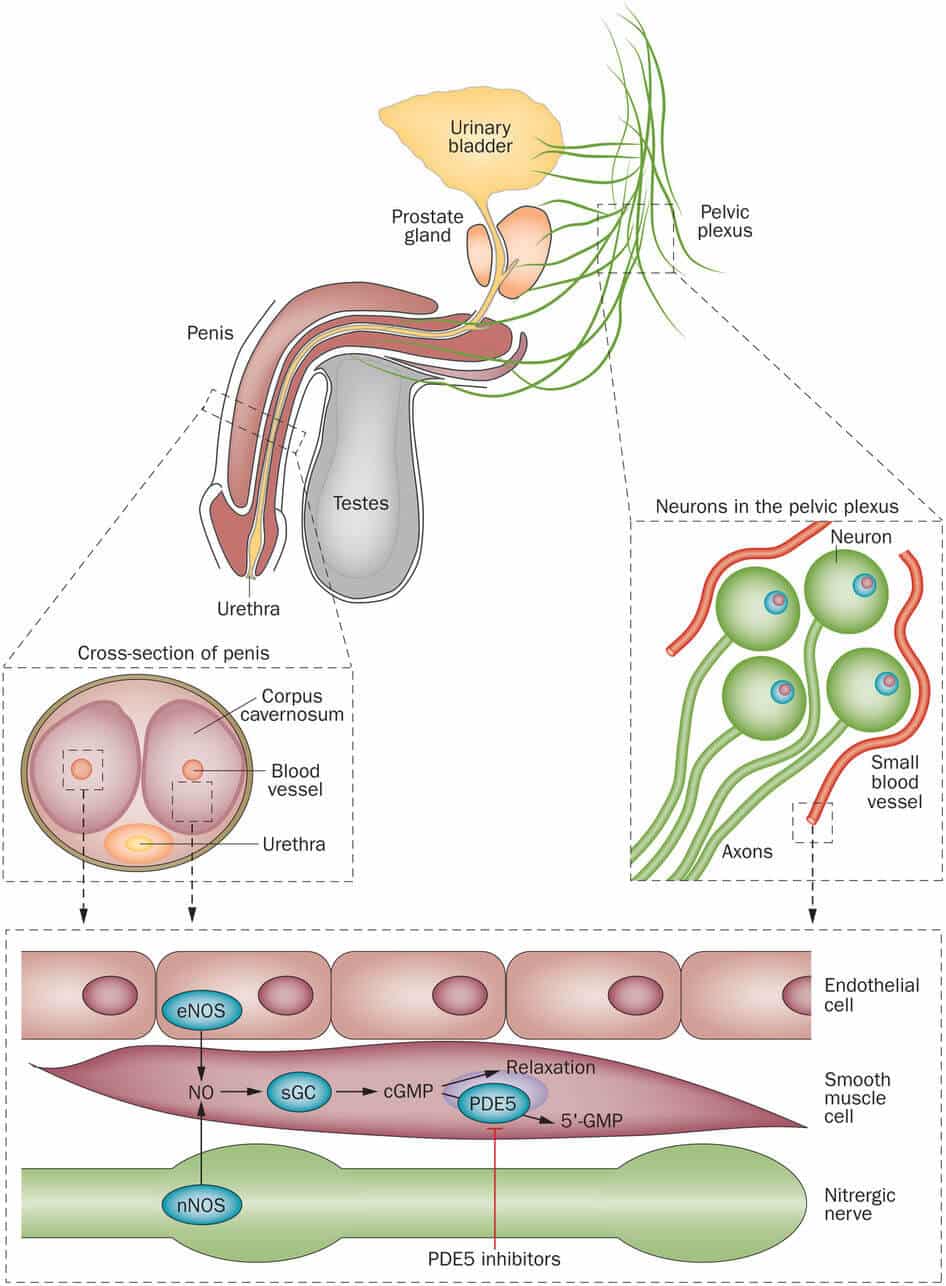
PDE5 inhibitors slow that breakdown. The synthetic versions (sildenafil, tadalafil, vardenafil, avanafil) do this aggressively in a single dose. Natural PDE5 inhibitors generally work more gently and over a longer time horizon — many also improve baseline circulation, support nitric oxide production directly, or address the underlying causes of weak erections (insulin resistance, oxidative stress, low testosterone) rather than just rescuing a single occasion.
The 10 Natural PDE5 Inhibitors
The list is ranked roughly by the strength of human evidence and reliability of effect. The first three (Black Ginger, Butea Superba, and Tongkat Ali) have the most consistent placebo-controlled trial data and are the ones we’d reach for first. Items further down the list either have thinner human evidence, work via parallel mechanisms (cAMP, aromatase inhibition, glucose control), or address upstream causes of vascular ED rather than direct PDE5 inhibition.
1. Black Ginger Extract (Kaempferia parviflora)
Black ginger is the most studied natural PDE5 inhibitor on this list. Its polymethoxyflavones — particularly 5,7-dimethoxyflavone — have been shown in vitro to inhibit PDE5 with measurable potency, and human trials report improved erectile function, exercise endurance, and lean body mass after 8–12 weeks of supplementation.
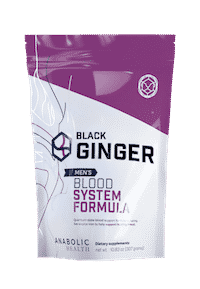
It’s the active in our Anabolic Health Black Ginger — standardized to the active flavonoid content rather than the generic root powder you’ll find on Amazon.
2. Butea Superba
A Thai tuber long used as an aphrodisiac. A 3-month placebo-controlled trial in men aged 30–70 with mild-to-moderate erectile dysfunction reported significant improvement in IIEF (International Index of Erectile Function) scores in the Butea group. The proposed mechanism is mild PDE5 inhibition combined with androgenic activity.
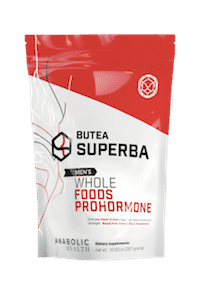
If the synthetics don’t agree with you and Black Ginger isn’t enough on its own, this is the next step. Available as Anabolic Health Butea Superba.
3. Tongkat Ali (Eurycoma longifolia)
Tongkat Ali targets the upstream cause of weak erections in many men: low free testosterone. Multiple randomized trials show it raises free T by reducing sex-hormone-binding globulin (SHBG) and supports erectile function indirectly through that mechanism. It also has documented effects on stress hormones — cortisol drops in studies, which matters because chronic stress is one of the most under-recognized causes of ED.
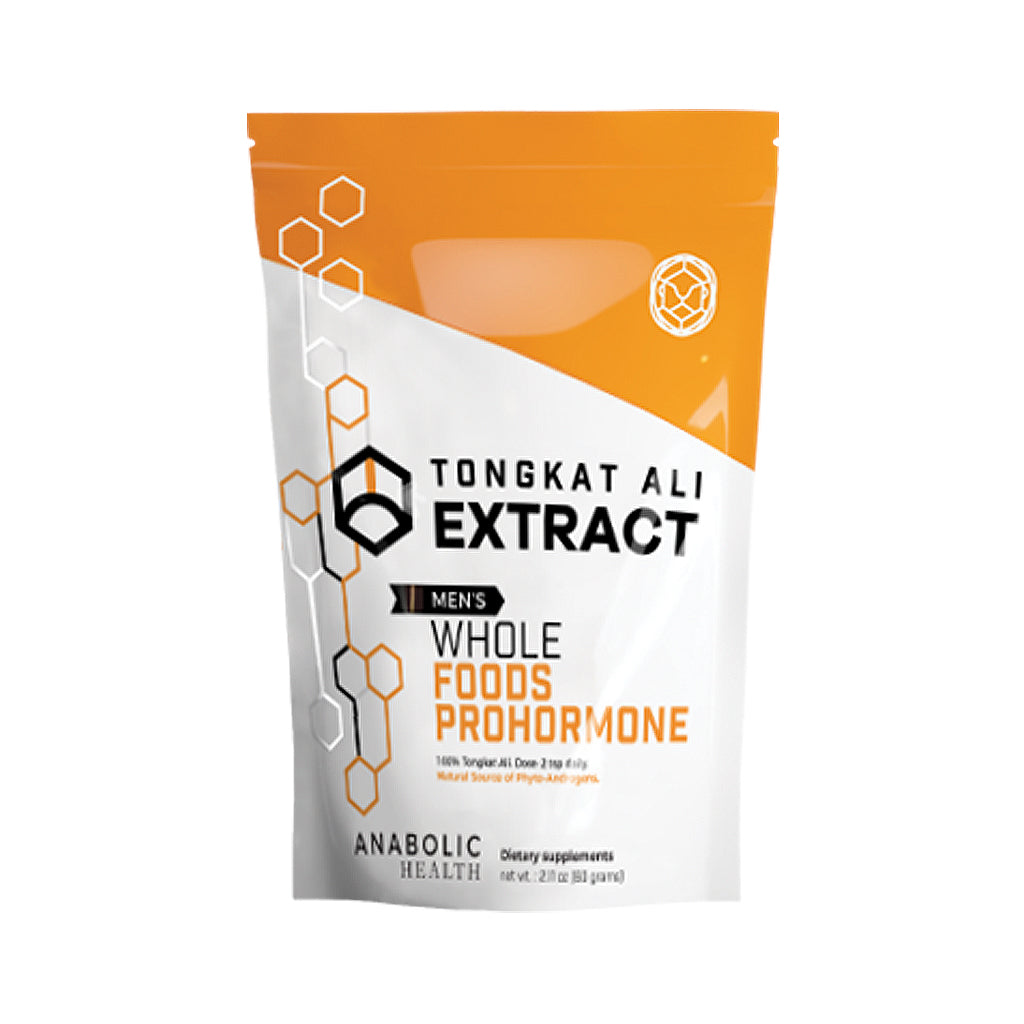
We carry Anabolic Health Tongkat Ali standardized for the eurycomanone content that drives the testosterone effect.
4. Icariin (Horny Goat Weed extract)
Icariin is the flavonoid in Epimedium (horny goat weed) that generates most of the herb’s reputation. In vitro, it inhibits PDE5 directly — less potently than sildenafil but with the same mechanism. Animal studies confirm improved erectile response. Human data is thinner than for Black Ginger but consistent with the proposed mechanism. Look for products standardized to at least 20% icariin.
5. Pycnogenol
Pycnogenol is a patented French maritime pine bark extract. The most cited human trial paired it with L-arginine in 40 men with ED: after 1 month, 80% reported improvement; after 3 months, 92.5% reported normal erectile function. Pycnogenol works by stimulating nitric oxide synthase — it doesn’t inhibit PDE5 directly so much as flood the system with the upstream substrate that PDE5 inhibitors protect.
6. L-Arginine & L-Citrulline
L-Arginine is the direct precursor to nitric oxide. L-Citrulline converts to L-Arginine in the kidneys and reaches the bloodstream more efficiently — which is why most current research uses citrulline rather than arginine. A small placebo-controlled trial in men with mild ED found that 1.5g/day of L-citrulline improved erection hardness scores. Combined with Pycnogenol the effect compounds.
Read more in our deep-dive on L-Citrulline dosage for ED.
7. Forskolin
From the roots of Coleus forskohlii. Forskolin doesn’t inhibit PDE5 directly — instead it activates adenylate cyclase, raising cAMP, which produces a similar smooth-muscle-relaxation effect through a parallel pathway. It also modestly raises free testosterone. The evidence for Forskolin specifically as an ED treatment is weaker than for the herbs above, but it’s a sensible adjunct in a stack.
8. Quercetin
A flavonoid found in onions, capers, and apples. Pre-clinical data shows Quercetin inhibits PDE5 in vitro at relevant concentrations, and improves endothelial function in humans. There are no large trials specifically for ED, but for men whose ED is downstream of cardiovascular issues (which is most cases over 50), Quercetin is on the right side of every relevant biomarker.
9. Artichoke Extract (Luteolin)
The active compound in artichoke leaf, luteolin, inhibits aromatase — meaning less testosterone gets converted to estrogen. That’s a different mechanism from PDE5 inhibition, but for men whose erection problems stem from estrogen dominance (common in middle-aged men with belly fat), artichoke addresses the cause rather than the symptom. More on natural aromatase inhibitors.
10. Cinnamon
Cinnamon doesn’t inhibit PDE5 directly but it’s on this list because it addresses one of the most common causes of vascular ED: insulin resistance. Multiple trials show cinnamon improves fasting glucose and HbA1c. Better glycemic control means a healthier endothelium, more nitric oxide, and stronger erections. It’s not a single-dose rescue — it’s a long-term cause-fix.
What the Clinical Evidence Shows: RCTs, IIEF Scores, and Botanical Drug Reviews
Most articles on natural PDE5 inhibitors stop at “studies suggest” hand-waving. The actual clinical trials on these compounds are sparser than the marketing implies, but they’re not zero. The clinical-evidence picture for natural PDE5 inhibitors as of late 2025 looks like this:
The IIEF Score: How These Studies Are Measured
The IIEF (International Index of Erectile Function) is the standardised 15-question instrument used in virtually every randomized controlled trial of erectile-function interventions. The IIEF-5 short form scores erection hardness, sustainability, satisfaction, and confidence on a 5-25 scale; mild ED scores 17-21, moderate ED scores 11-16, severe ED scores below 11. A clinically meaningful improvement is generally considered a 4-point IIEF rise. For comparison, sildenafil typically produces 8-10-point IIEF improvements in moderate ED at standard doses. The strongest natural-PDE5-inhibitor trials produce 2-5-point improvements — real but pharmacologically modest.
Botanical Drugs With Published Human Trial Data
The 2023 Frontiers in Pharmacology review of botanical drugs for erectile dysfunction synthesised the available clinical trials across plant-based PDE5 inhibitors and ranked them by evidence strength:
- Kaempferia parviflora (Black Ginger) — multiple placebo-controlled RCTs in Thai and Japanese populations show measurable erection-hardness improvements at 100–200 mg daily over 8–12 weeks. The methoxyflavone content (3,5,7-trimethoxyflavone) is a confirmed PDE5 binder in vitro.
- Panax ginseng (Korean Red Ginseng) — meta-analysed across 7 RCTs (n=349). Mean IIEF improvement of 4.4 points vs placebo at 900 mg three times daily for 8–12 weeks. The strongest peer-reviewed evidence in the natural-PDE5 category.
- Tribulus terrestris — mixed results. Several RCTs show improvement on the IIEF but the highest-quality trials show effects driven more by libido and confidence than by direct PDE5 inhibition. Less of a PDE5 inhibitor, more of an upstream androgen modulator.
- Icariin (Epimedium / Horny Goat Weed) — the strongest in vitro PDE5 binding affinity of any plant-derived compound (Ki around 0.43 µM for icariin’s main aglycone). Human RCTs are limited; most evidence is from animal models. Promising mechanism, weaker clinical proof.
- Pycnogenol + L-arginine — a French maritime pine bark extract stacked with L-arginine. Two RCTs (n=124) showed IIEF improvements of 4–5 points at 120 mg Pycnogenol + 1.7 g L-arginine daily over 1–3 months.
Why Sample Sizes Stay Small
Natural products don’t have the funding structure that pushes pharmaceutical PDE5 inhibitors through Phase III trials with thousands of participants. The typical natural-PDE5 RCT runs 30–100 participants over 8–12 weeks — enough to detect a meaningful effect for a moderately powerful compound, not enough to nail down dose-response curves or rare adverse events. That’s a real limitation but not a reason to dismiss the data; the trials that exist are mostly randomized, mostly placebo-controlled, and mostly published in peer-reviewed journals. The signal is real for the better-evidenced compounds even if the sample sizes are modest.
What the Trials Don’t Tell You
Two important caveats for interpreting any of these clinical trials: (1) the populations studied are mostly men with mild-to-moderate ED of vascular or psychogenic origin — results don’t extrapolate to men with severe vasculogenic ED, post-prostatectomy ED, or neurogenic ED. (2) Standardisation is the sleeper issue. A “Kaempferia parviflora 100 mg” capsule from a research-grade supplier is not the same as a generic Amazon “black ginger” capsule. The trials use specific extracts at specific concentrations — if you’re matching products to trials, look at the specific extract name and dose, not the herb name on the label.
How To Use These
For most men a sensible starting stack is Black Ginger + Tongkat Ali daily, with L-Citrulline added pre-bedroom on demand. Butea Superba can be cycled in if response plateaus. Pycnogenol pairs especially well with L-Citrulline. Avoid combining any of these with prescription PDE5 inhibitors without your doctor’s knowledge — the additive effect on blood pressure can be significant.
Allow 4–8 weeks for the herbs to reach steady-state effect. The amino acids work faster but require consistent dosing. Foundation matters more than any single supplement — if your circulation is poor or your testosterone is low, address those first. See our guides on herbs for circulation, how to lower SHBG, and testosterone-boosting foods for the foundation work.
Frequently Asked Questions
Do natural PDE5 inhibitors really work?
The strongest evidence is for Black Ginger, Butea Superba, and the Pycnogenol + L-Arginine combination — all have human placebo-controlled trials showing improvement in erectile function scores. They don’t produce the on-demand single-dose effect of Viagra; they work by improving baseline vascular function over weeks.
How fast do they work compared to Viagra?
Sildenafil acts in 30–60 minutes for a 4-hour window. Most natural PDE5 inhibitors require 4–8 weeks of consistent dosing for the full effect. L-Citrulline is the closest to a same-day option and works in roughly 1–2 hours.
Can I combine natural PDE5 inhibitors with Viagra or Cialis?
Don’t do this without medical supervision. Both work to relax blood vessels and the additive effect can drop blood pressure dangerously. Pick one approach.
Are there side effects?
Generally mild compared to synthetics. Common reports include digestive upset (especially with high-dose herbs), occasional headaches, and mild stimulation from Black Ginger. Anyone on blood-pressure medication or anticoagulants should consult their doctor first.
Which one should I start with?
If you want a single starting point: Black Ginger. It has the strongest mechanism-of-action research, the most consistent human data, and no significant interactions for healthy adults. Add Tongkat Ali if you suspect testosterone is part of the picture.