
By Alex Eriksson · Medically reviewed by Ivan Kokhno, MD · Last updated May 2026
Quick verdict. Dermacrine (sometimes labelled Dermacrine Sustain Alpha) is a transdermal prohormone formulated by Iconic Formulations. Its core compound is DHEA delivered via the skin, paired with resveratrol, pregnenolone and an anti-oestrogen complex. In practice it’s a moderate-strength testosterone-support cycle aid — useful for the right person, oversold for everyone else. Read on for what’s actually inside, what users report, side-effect risk, and who should skip it.
Below in this review: Full ingredient breakdown, what real users report on physique and libido outcomes, the side-effect risk profile (DHEA-related and resveratrol-related), the right candidate vs. the wrong candidate, and the natural alternatives that hit the same testosterone-support pathways without the transdermal prohormone load.
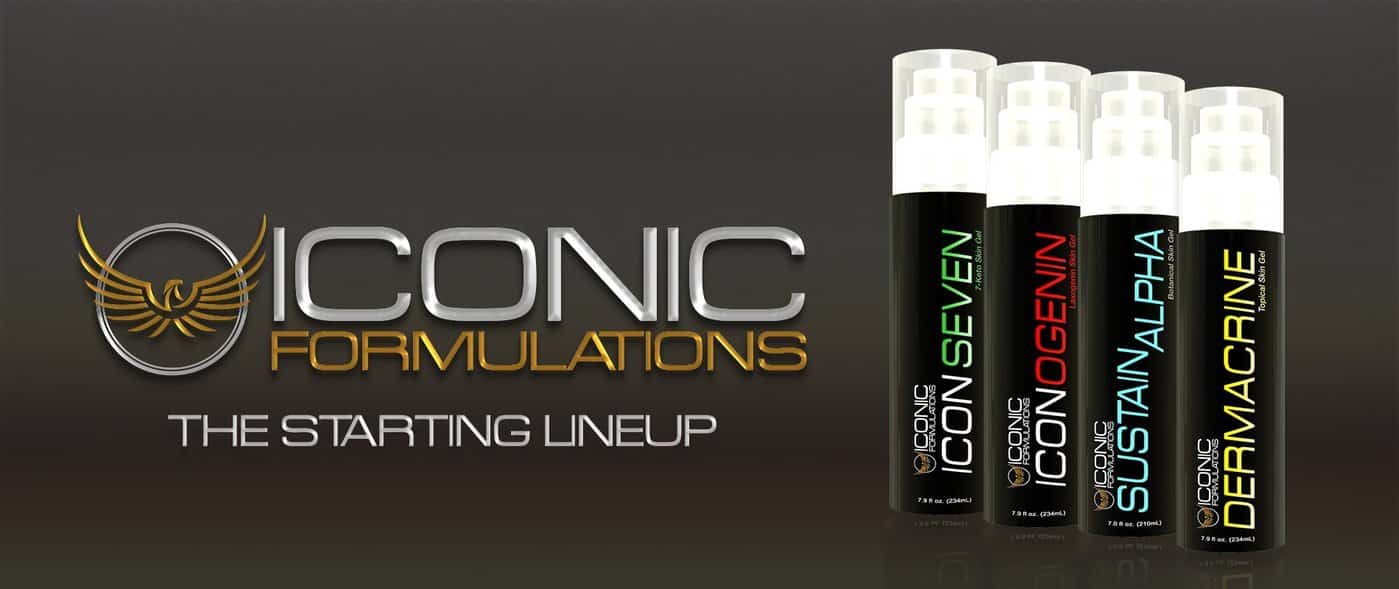
Dermacrine at a Glance
| Detail | Specification |
|---|---|
| Manufacturer | Iconic Formulations |
| Format | Transdermal liquid (applied to skin) |
| Primary active | DHEA (dehydroepiandrosterone) |
| Supporting compounds | Resveratrol, Pregnenolone, 7,8-Benzoflavone, Chrysin |
| Typical cycle length | 4–8 weeks, with 4-week off-cycle |
| Best use case | Cutting / recomp / over-30 hormone support |
| Avoid if | Tested athlete, prostate issues, hair-loss-prone |
About the Brand
Iconic Formulations is a small, supplement-industry-focused brand best known for transdermal hormone-support stacks. Compared with mass-market sport supplements, Iconic targets the experienced lifter and biohacker market — people who already understand prohormone cycling and want a transdermal alternative to oral compounds (which carry liver risk).
The brand’s reputation in the bodybuilding community is broadly positive: ingredient quality and dosing are above average, customer service is responsive, and most negative reviews concern individual goal-mismatch rather than product quality. They are not a major retail brand and the product is generally bought direct or through specialty supplement sites.
Main Ingredients (Decoded)
DHEA (Dehydroepiandrosterone)
DHEA is the primary active. It’s a precursor adrenal hormone that the body converts into both testosterone and oestrogen. Transdermal application bypasses first-pass liver metabolism, producing roughly 2× the bioavailability of an equivalent oral dose. The trade-off: bypassing the liver also means less control over the testosterone-vs-oestrogen conversion, which is exactly why the formula bundles aromatase-inhibitor compounds (see below).
Effective DHEA dose for hormonal effect in men over 30 is 25–50 mg; Dermacrine’s per-application dose is in this range.
Pregnenolone
Pregnenolone is the “mother hormone” from which DHEA, progesterone and downstream sex steroids are made. Adding it gives the body more substrate to work with — useful for men whose adrenal output has dropped (post-30, post-stress, post-prolonged-cutting). It also has independent cognitive and mood effects, which is what many users report from Dermacrine before any visible body-composition change shows up.
Resveratrol
Resveratrol is the polyphenol from grape skins that became famous through red-wine research. In a hormone-support context, its role is mild aromatase inhibition (less DHEA-to-oestrogen conversion) plus general antioxidant and circulation support. Standalone it’s weak; in this stack, it’s a synergist.
Anti-Estrogen Complex (7,8-Benzoflavone & Chrysin)
Both compounds are dietary aromatase inhibitors — they reduce the conversion of testosterone (and DHEA) into oestradiol. Without these, transdermal DHEA risks raising oestrogen alongside testosterone, producing the unwanted “wet” effects (water retention, gynecomastia risk).
The honest caveat: chrysin and 7,8-benzoflavone are not as potent as pharmaceutical aromatase inhibitors (Arimidex, Letrozole) or even some other natural compounds in the same category. They take the edge off; they do not fully control oestrogen at high DHEA doses. For more on natural options in this category see our guide to natural aromatase inhibitors.
What Dermacrine Actually Does (Effects)
Based on the formulation and on the body of user reports across forum communities, expect the following over a 6–8 week cycle:
- Improved libido and morning erections — usually the first noticeable change, often within 7–14 days.
- Mood elevation, sharper drive, sometimes mild euphoria — pregnenolone’s direct CNS effect plus the testosterone uplift.
- Subtle body-composition shifts — harder, drier appearance over weeks 3–6 rather than dramatic mass gains. Dermacrine is more a recomp tool than a bulker.
- Modest strength uptick — 5–10 % on big lifts is realistic for a trained lifter. Beginners will see more, but they’d see most of that without any prohormone.
- Increased aggression / motivation in the gym — reported by most users; some find this useful, others find it spills into daily life unhelpfully.
What it does not do: replace testosterone for someone with clinically low T, transform a beginner’s physique, or substitute for proper diet and training. The effects are real but moderate — aligned with the moderate doses in the formula.

How to Use Dermacrine
The standard protocol from Iconic Formulations and confirmed across user reports:
- Apply once or twice daily to clean, dry skin on areas with moderate body-fat (inner thighs, abdomen, back of shoulders). Avoid bony areas and areas you’ve just shaved.
- Wait 5–10 minutes before covering with clothes; do not shower or sweat heavily for at least 60 minutes after application for best absorption.
- Cycle 4–8 weeks, then a 4-week off-cycle. Going beyond 8 weeks reliably produces side-effect creep (lipid changes, suppression).
- Run a basic post-cycle protocol: D-aspartic acid or natural testosterone-support compounds, plus a real aromatase-inhibition strategy if you felt any oestrogen rebound during the cycle.
- Cycle support during the cycle: milk thistle, NAC, CoQ10, omega-3s — standard prohormone-support stack for liver and lipids.
Side Effects and Safety
Dermacrine’s side-effect profile is the standard transdermal-DHEA profile, with the anti-oestrogen complex taking the edge off the worst of it:
- Skin irritation at the application site, especially with daily use on the same spot. Rotate sites.
- Oily skin / mild acne on the back and shoulders.
- Mild hair thinning in genetically susceptible men — the DHEA-to-DHT conversion is mild but real.
- Mild oestrogen-related effects at high doses or long cycles — water retention, mood swings, occasional gynecomastia-related sensitivity. The chrysin/benzoflavone helps but does not eliminate this risk.
- Testosterone suppression at the end of an 8-week cycle — mild compared with oral prohormones; recovers within 4 weeks of cessation in most users.
- Skin transfer — transdermal compounds can transfer to a partner or child by skin contact for several hours after application. Cover the area or wait until full absorption.
Avoid Dermacrine entirely if you compete in tested sport (DHEA is on the WADA Prohibited List), if you have any prostate symptoms, if you have a strong family history of male-pattern hair loss, or if you’re a woman of reproductive age (DHEA-induced androgenisation is largely irreversible).
Who Dermacrine Is For (and Who Should Skip It)
Good fit:
- Experienced lifter, 30+, looking for a recomp aid during a cut or maintenance phase
- Has a clean diet, real training program, and 7+ hours of sleep already in place
- Wants a transdermal alternative to oral prohormones (no liver impact, easier to dose)
- Has done one or two prohormone cycles before and tolerated them well
Skip it:
- Looking for dramatic muscle gains — this isn’t that compound. Use a stronger oral prohormone with proper PCT, or work on training and diet first.
- Tested athlete (NCAA, USADA, professional sports leagues) — DHEA is banned.
- Strong family history of male-pattern baldness — the DHT conversion is mild but enough to accelerate genetic loss.
- Any prostate issue or family history of prostate cancer.
- Beginner without a real training program — you’ll see more from a year of consistent training and food than any prohormone cycle.
- Women — do not use; androgenic side effects in women are typically permanent.
Dermacrine Alternatives Worth Considering
Depending on your goal, several compounds and stacks accomplish similar outcomes with different trade-offs:
- Epiandrosterone (Epi-Andro): oral prohormone that converts directly to DHT. Stronger muscle-building effect than Dermacrine but with full DHT side-effect risk and no oestrogen rebound. Best for cutting cycles when hair-loss isn’t a concern.
- Natural test-support stack: Butea Superba + Tongkat Ali + zinc + boron + creatine, with Ashwagandha for cortisol management and the D-K-A-E cofactor multivitamin on top. No prohormones, no PCT needed, slower (8–12 weeks) but no suppression and no skin-transfer concerns. Read our guide to how to increase DHT naturally for the full protocol.
- Dietary DHEA + AI + cycle support, separately sourced: for experienced users, building the same stack from individual components is cheaper and lets you dose each component independently. Requires more research.
- TRT (medical): if your blood work confirms genuinely low testosterone, prescription testosterone replacement is more effective and safer than any prohormone cycle. Requires a clinician.
Verdict
Dermacrine is a competent, well-formulated transdermal prohormone for a specific buyer: an experienced lifter over 30 who wants a moderate-strength recomp aid without the liver hit of oral compounds. The DHEA + pregnenolone base is sensible, the included anti-oestrogen support is real (if not maximally potent), and the transdermal delivery genuinely produces better DHEA bioavailability.
It’s overrated as a muscle-building compound (use a stronger oral prohormone with full PCT for that goal) and underrated as a hormone-support stack for men in their late 30s and 40s who feel the post-30 slump but aren’t ready for TRT. If you’re in that profile, training hard, eating well and sleeping enough, an 8-week Dermacrine cycle is reasonable and reasonably safe. If you’re anywhere else on the user spectrum, look at the alternatives above first.
Frequently Asked Questions
Q: What does Dermacrine actually do?
A: Dermacrine is a transdermal hormone-support cycle aid — primarily DHEA delivered through the skin, with pregnenolone, resveratrol and a mild aromatase-inhibitor complex. Over 6 to 8 weeks it produces noticeable libido, drive and recomp effects in most users, with subtle (not dramatic) muscle-building effects.
Q: Is Dermacrine a steroid?
A: It contains DHEA, which is a steroid hormone naturally produced in the human body. It’s legal as a dietary supplement in the United States, but it is on the WADA Prohibited List and banned in tested sport. It is not a controlled anabolic steroid under U.S. law.
Q: How long does it take Dermacrine to work?
A: Libido and morning-erection effects often show within 1 to 2 weeks. Mood and gym-aggression effects typically follow in week 2 to 3. Visible body-composition changes show up in week 4 to 6 of an 8-week cycle.
Q: What are the side effects of Dermacrine?
A: Most-reported are skin irritation at the application site, oily skin and mild acne, and (in genetically susceptible men) accelerated scalp hair thinning. Less common but possible: oestrogen-related water retention or gynecomastia sensitivity, mild testosterone suppression at the end of a cycle, and skin-contact transfer to family members during the absorption window.
Q: Do you need a PCT after Dermacrine?
A: A light PCT is recommended after an 8-week cycle. The suppression is milder than oral prohormones but still real. A 2 to 4-week PCT with D-aspartic acid or a natural testosterone-support compound and the same cycle support (milk thistle, NAC) used during the cycle is sufficient for most users.