
Medically reviewed by Ivan Kokhno, MD — Research analysis by Alex Eriksson · Updated May 2026
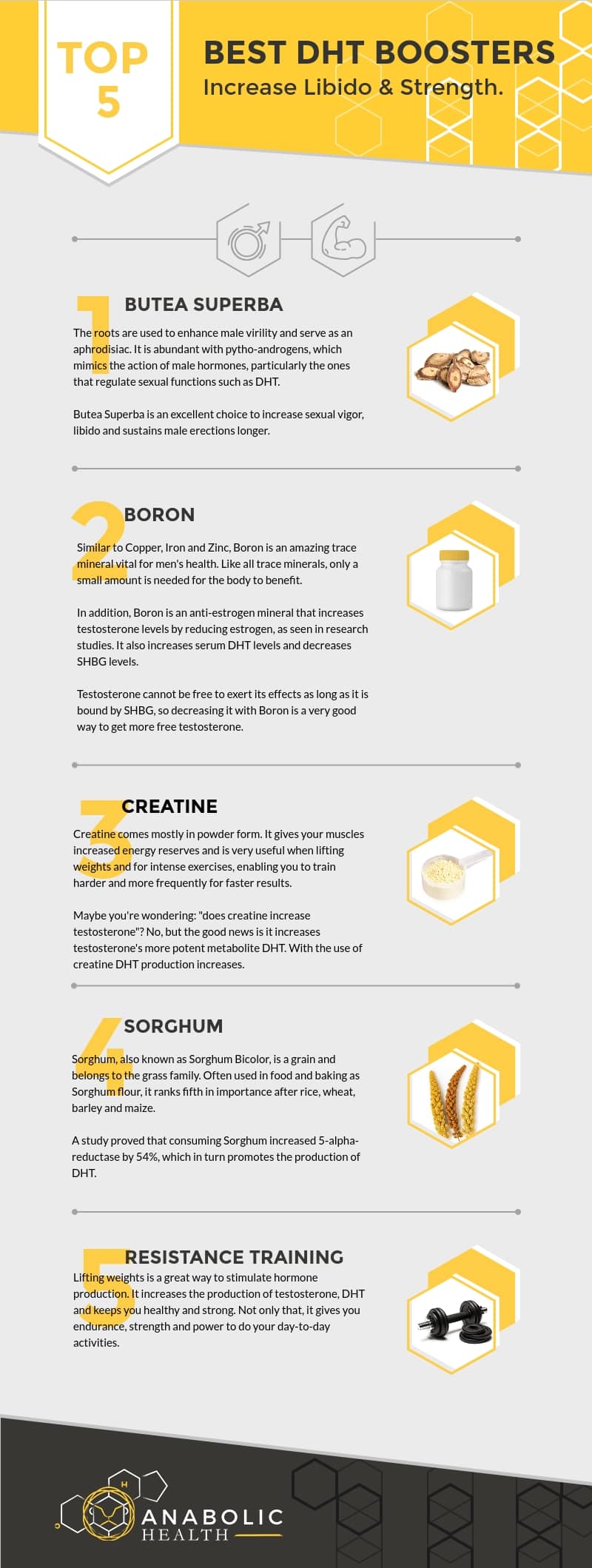
Butea superba (Thai name kwao krua daeng) is a vine root rich in phytoandrogens — molecules that bind directly to the androgen receptor and produce measurable elevations in testosterone and DHT in human and animal studies. The 2012 Cherdshewasart trial showed Butea Superba root powder at 250 mg twice daily produced significant erectile-function and androgen-marker improvements in men with mild-to-moderate ED. It’s the most direct natural DHT-boosting herb in the modern supplement compendium.
What actually matters: Butea Superba works upstream and downstream simultaneously — it raises testosterone substrate AND nudges 5-alpha-reductase activity, which is why DHT elevation tends to outpace testosterone elevation on this herb. Standard daily dose is 250–500 mg of standardised root powder for 6–8 weeks. Below: the published research, dosing protocol, side-effect profile, sourcing guide, and the full stacking pairing.
What Butea Superba Is and Why It Matters for DHT
Butea superba Roxb. is a climbing vine native to Thailand, Vietnam, China, and parts of India. The Thai population call it kwao krua daeng (“red kwao krua”) to distinguish it from the white kwao krua (Pueraria mirifica), which is its hormonally opposite female-tonic counterpart. The medicinal part is the tuberous root, traditionally consumed as a powder or decoction by Muay Thai fighters before training and by older men as an aphrodisiac and male tonic.
The root contains a class of compounds called phytoandrogens — plant-derived molecules with structural similarity to endogenous androgens. Unlike pure isoflavones or saponins, phytoandrogens bind directly to the androgen receptor and partially activate it, producing testosterone-like and DHT-like signaling at the tissue level. This is mechanistically distinct from upstream androgen-supportive herbs (Tongkat Ali, ashwagandha) that work by improving testicular signalling or reducing cortisol — Butea Superba acts at the receptor itself.
Where to Get Authentic Butea Superba
Genuine Thai-grown Butea Superba is hard to find outside Thailand — sourcing it properly is exactly why we started stocking it.
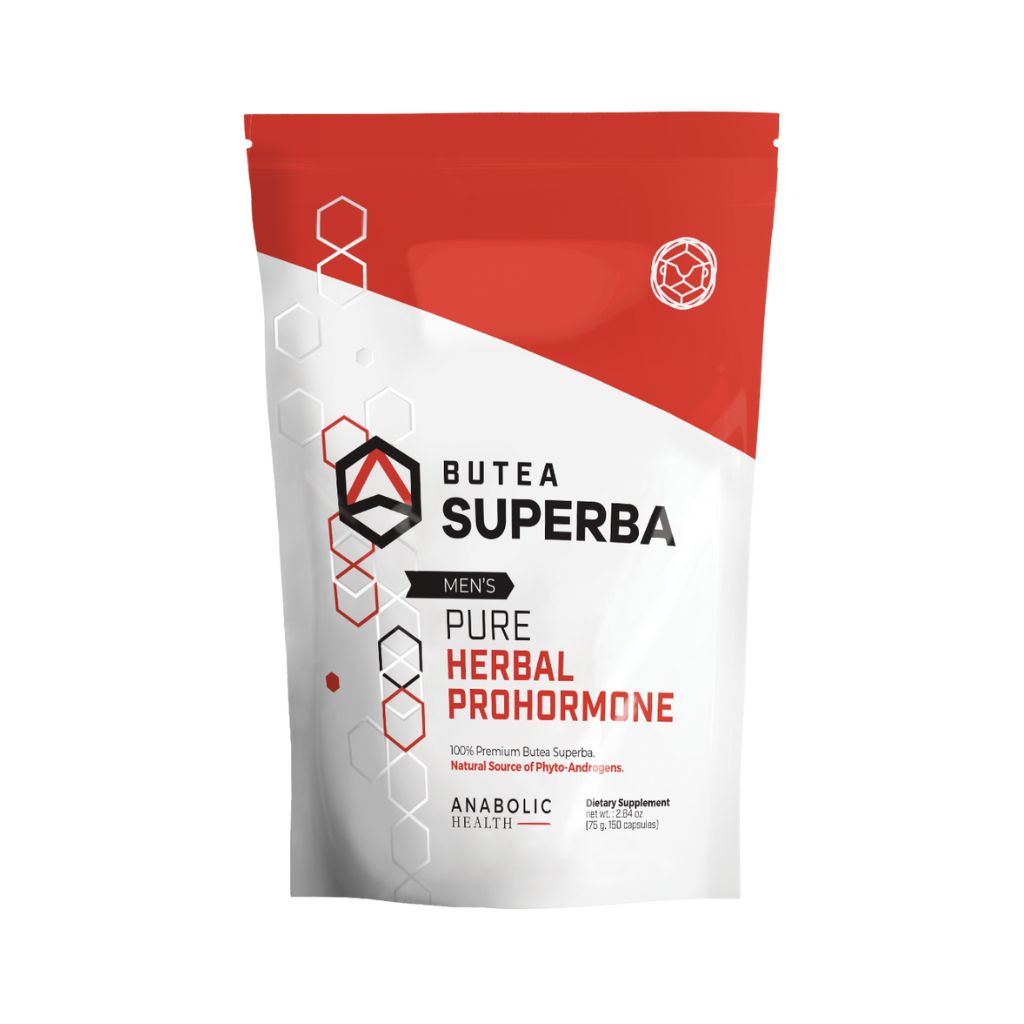
Authentic Thai Butea Superba (Red Kwao Krua) root powder — the traditional male-vitality botanical this article is about, sourced in Thailand.
★★★★★ $29.95 $23.95
The Clinical Evidence: What the Trials Actually Show
Several human and animal trials anchor the Butea Superba evidence base:
- Cherdshewasart and Nimsakul (2003) — the foundational human RCT. 250 mg of dried Butea Superba root twice daily for 3 months in 17 men aged 30–70 with mild-to-moderate ED produced statistically significant improvements in erectile function and androgen markers. No serious adverse effects reported.
- Manosroi et al. (2006) — rat study showing dose-dependent rise in serum testosterone with Butea Superba root extract administration, with the upper dose range also significantly increasing seminal vesicle and prostate weight (markers of androgen action).
- 2015 hyperandrogenemia case report (Indian Journal of Endocrinology and Metabolism) — a 35-year-old man supplementing with Butea Superba presented with serum DHT of 1,512 pg/mL (reference range 250–990). The case is medically notable because it confirms that Butea Superba can drive DHT levels well above physiologic ceilings at high doses — a useful warning for the dose-finding section below.
- Multiple animal studies (2008–2018) showing Butea Superba upregulates 5-alpha-reductase mRNA expression in addition to raising testosterone substrate — explaining the DHT-skewed androgen profile users report.
The clinical picture: at standard doses (250–500 mg/day), Butea Superba reliably produces measurable testosterone and DHT elevation in healthy men over 8–12 weeks. The effects are dose-dependent, occasionally striking (the 1,512 pg/mL DHT case), and reversible on discontinuation.
Butea Superba Dosage: The Evidence-Based Protocol
The validated dosing range from the published trials is 250–500 mg of dried Butea Superba root daily, taken in divided doses with food. Dose-response is real but not linear — doubling the dose doesn’t double the effect, and at >1,000 mg/day the side-effect profile worsens noticeably without proportional benefit.
- Start at 250 mg twice daily for 4 weeks. Use standardised root powder, not whole-bark powder, which is variable.
- Reassess at 8 weeks: morning erections, libido, training capacity, mood. If responding well, continue. If side effects (acne, oily skin, mild aggression) appear, drop to 250 mg once daily.
- Cycle off periodically — 8 weeks on, 4 weeks off — to monitor whether endogenous androgen production is being affected. Animal data suggests Butea Superba doesn’t suppress LH/FSH at typical doses but high chronic doses might.
- Bloodwork is helpful but not strictly required: total and free testosterone, DHT, LH, FSH, and estradiol at baseline + 8 weeks gives the cleanest picture. The 1,512 pg/mL DHT case suggests monitoring is valuable for dose-titration discipline.
The Swanson Butea Superba product () is a 400 mg standardised capsule that’s the easiest entry point for users wanting the encapsulated form. For dose-flexibility and lower per-gram cost, our AH Butea Superba root powder is a single-ingredient bulk extract.
Butea Superba Side Effects, Safety, and Toxicity
At doses within the standard 250–500 mg/day range, Butea Superba is well-tolerated by most adult men. Reported side effects in published trials and user logs:
- Acne and oily skin — the most common DHT-elevation side effect. Dose-dependent. Usually resolves on lowering dose or cycling.
- Mild aggression or libido spike — the desired effects can overshoot in some users. Reduce dose if intrusive.
- Hair shedding in genetically susceptible men. The same DHT elevation that supports libido and lean mass can accelerate androgenic alopecia in men with sensitive scalp follicles. Pair with topical scalp protection (ketoconazole shampoo, possibly topical finasteride) if hair preservation is a concern.
- The 1,512 pg/mL DHT case report showed gynecomastia and other hyperandrogenism markers at very high doses — a reminder that “natural” doesn’t mean “harmless at any dose.”
The 2008 Pubmed-indexed rat toxicology study (Tiyaboonchai et al.) showed dose-dependent decreases in testosterone at 150–200 mg/kg/day in rats — far above human equivalent doses, but worth noting as evidence that the dose-response curve isn’t linear and very high chronic dosing can paradoxically suppress hormones rather than elevate them.
Stacking Butea Superba With Other DHT-Supportive Levers
Butea Superba works as a standalone but pairs well with complementary mechanisms for a fuller hormonal-optimisation stack:
- Tongkat Ali (200 mg/day) — raises testosterone substrate via the LH-testes axis, complementing Butea’s downstream phytoandrogen action. Our Tongkat Ali (Eurycoma longifolia) is the cleanest single-ingredient option.
- Boron (3–6 mg/day) — reduces SHBG so more testosterone is biologically available for conversion to DHT.
- Resistance training 3–5x/week — the strongest natural DHT lever; non-negotiable.
- Adequate body fat (8–14%) — aromatase activity in adipose tissue converts testosterone to estradiol; high body fat actively opposes DHT optimisation.
- Anabolic Octane (D-K-A-E) — vitamin D supports steroidogenesis cofactor demand. Our D-K-A-E multivitamin covers the fat-soluble bases.
Frequently Asked Questions
Q: How quickly does Butea Superba raise DHT?
A: Subjective effects (libido, training capacity, morning erections) typically appear within 7–14 days. Measurable serum DHT elevation appears within 4–8 weeks of consistent dosing at 250–500 mg/day. The phytoandrogen receptor binding is acute, but the steady-state hormonal shift takes weeks to consolidate.
Q: Will Butea Superba cause hair loss?
A: Only in men with genetic susceptibility to androgenic alopecia — the same population who would shed on TRT or any other DHT-elevating intervention. Pattern hair loss is driven by follicle sensitivity to DHT at the scalp, not by systemic DHT level alone. If you have a family history of male-pattern baldness, pair Butea Superba with topical scalp protection.
Q: Can I take Butea Superba with Tongkat Ali?
A: Yes, and the combination is one of the most popular natural-androgen stacks in the bodybuilding and biohacking communities. Tongkat Ali raises testosterone substrate; Butea Superba binds the androgen receptor directly and nudges 5-alpha-reductase. Different mechanisms, additive effects. Standard stack: 200 mg Tongkat Ali + 250 mg Butea Superba twice daily for 8–12 weeks.
Q: Is Butea Superba safe for men under 30?
A: Most published trials are in men over 30 because that’s where age-related androgen decline starts to matter. Younger men with normal hormone panels generally don’t need Butea Superba supplementation and risk endogenous suppression with chronic high-dose use. If you’re under 30 and curious, run the protocol short (4–6 weeks) at the lower dose (250 mg/day) and cycle off.
Q: Where does Butea Superba sit relative to other DHT-boosting herbs?
A: Strongest direct DHT mechanism in the natural compendium. Sorghum upregulates 5-alpha-reductase but doesn’t add substrate; pine pollen contains some natural androgens but at much weaker concentrations; Tongkat Ali raises testosterone substrate but doesn’t directly bind the androgen receptor. Butea Superba is the only natural option that meaningfully combines all three mechanisms. See our DHT supplement comparison guide for the full ranking.
The Bottom Line on Butea Superba and DHT
Butea Superba is the natural compendium’s answer to “I want measurable testosterone and DHT elevation without TRT.” The 250–500 mg/day dosing range has solid clinical evidence; the side-effect profile is manageable with disciplined cycling and bloodwork; the 1,512 pg/mL DHT case report sets a reasonable upper-bound caution. Stacked with Tongkat Ali, boron, and foundational lifestyle, Butea Superba produces among the cleanest natural androgen-optimisation results available. For broader hormonal context, see our guides on raising DHT naturally, DHT supplement comparison, and DHEA for erectile dysfunction.